
Key Takeaways
- Overwatering creates the perfect environment for five deadly soybean diseases: Phytophthora root rot, Sudden Death Syndrome, White Mold, Pythium seedling blight, and Rhizoctonia root rot.
- Poor irrigation timing costs USA soybean farmers an average of 15-25% yield loss when disease outbreaks occur, with some fields experiencing total crop failure in saturated conditions.
- The critical window for disease prevention is early season (VE-V3 stages) when cool, wet soil allows pathogens to establish in young plants before they develop resistance.
- Smart irrigation systems can reduce disease-related losses by 60-80% by monitoring soil moisture and preventing the prolonged saturation that triggers fungal and oomycete growth.
- Each disease has a specific moisture threshold – knowing these levels helps you adjust irrigation before pathogens take hold in your fields.
Poor irrigation timing triggers five major soybean diseases by creating saturated soil conditions that favor fungal and oomycete pathogens, particularly during early growth stages when plants are most vulnerable.
- Phytophthora root rot
- Sudden Death Syndrome
- White Mold
- Pythium blight
- Rhizoctonia rot
These diseases share a common cause: too much water at the wrong time, which depletes soil oxygen and weakens plant defenses.
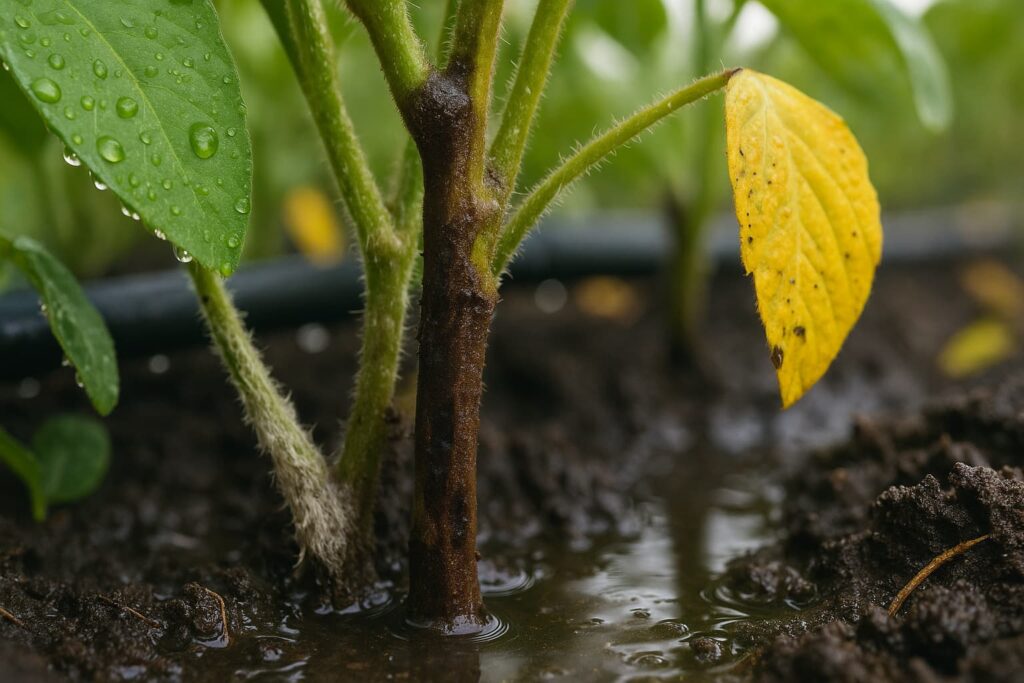
Understanding How Overwatering Creates Disease Problems
When you apply too much water or irrigate at the wrong time, you’re not just wasting resources. You’re creating the exact conditions that soil-borne pathogens need to attack your soybean crop. Here’s what happens beneath the surface when irrigation timing goes wrong.
Waterlogged soil becomes an oxygen-depleted zone within 24-48 hours of saturation. Your soybean roots need oxygen to function properly, and when soil pore spaces fill with water instead of air, root cells start dying. This weakens the plant’s natural defense systems right when disease organisms become most active.
Saturated soil conditions trigger three simultaneous problems that make disease outbreaks almost inevitable: oxygen starvation weakens root tissues, water-loving pathogens multiply rapidly in film water around roots, and stressed plants can’t produce the defensive compounds that normally block infection.
The disease triangle concept helps explain why timing matters so much. You need three things for disease: a susceptible host (your soybeans), a virulent pathogen (present in most soils), and favorable environmental conditions. Your irrigation timing controls that third factor. When you keep soil saturated, especially during cool periods or critical growth stages, you’re completing the triangle and inviting disease problems[1].
Most soybean farmers understand that water stress hurts yields. What many don’t realize is that overwatering causes just as much damage through disease as underwatering causes through drought stress. The difference is that disease damage often shows up later in the season, making it harder to connect the problem back to poor irrigation decisions made weeks or months earlier.
The Five Diseases That Strike When Irrigation Timing Fails
Not all soybean diseases respond the same way to excess moisture. These five pathogens are specifically adapted to thrive in waterlogged conditions, and they account for the majority of irrigation-related yield losses across USA soybean regions.
1. Phytophthora Root and Stem Rot: The Number One Overwatering Disease
Phytophthora sojae causes more damage from poor irrigation timing than any other soybean pathogen. This water mold produces swimming spores that literally need free water in the soil to move and infect roots. When you keep soil saturated for 24 hours or longer, you’re giving these spores exactly what they need to reach and penetrate soybean roots[2].
The disease shows up in two forms depending on when infection occurs. Early-season infection during germination and emergence (VE-V1 stages) causes seed rot and damping-off. You’ll see dead seedlings and poor stand establishment in low spots or areas where water pools. Later infection after V3 stage creates the characteristic dark brown stem lesion that extends upward from the soil line. Infected plants yellow, wilt, and often die before reaching maturity.
What makes Phytophthora particularly dangerous is how quickly it moves through a field once conditions favor infection. A single irrigation event that saturates soil in warm weather (70-80°F) can trigger widespread infection within 48 hours. The pathogen produces multiple generations of spores during one wet period, exponentially increasing disease pressure.
Fields with poor drainage or compacted soil layers are especially vulnerable. Water that can’t drain away keeps creating infection opportunities even after you stop irrigating. This is why you’ll often see Phytophthora damage concentrated in field depressions, end rows where pivots overlap, or areas where equipment traffic has compressed the soil.
2. Sudden Death Syndrome: The Hidden Cost of Early Season Overwatering
Sudden Death Syndrome tricks many farmers because symptoms don’t appear until mid to late season, long after the irrigation mistakes that caused the problem. The fungus Fusarium virguliforme infects roots during cool, wet conditions early in the season—typically at planting through V3 stage. But you won’t see foliar symptoms until after flowering, usually at R3-R5 stages when yield is being determined[3].
The disease process starts when saturated soil in the 50-60°F temperature range allows the fungus to colonize young roots. These early infections remain mostly invisible for weeks or months. The fungus grows slowly in root tissue, producing toxins that eventually move upward through the plant. When hot weather arrives during pod fill, these toxins finally cause the characteristic interveinal yellowing and browning of leaves.
This delayed symptom expression means that many farmers don’t connect SDS outbreaks to irrigation problems that happened during planting season. You might see healthy-looking plants through vegetative and early reproductive stages, then watch fields decline rapidly in August. By then, the damage is done and there’s no treatment that will save your yield.
SDS is particularly destructive because it attacks during the critical pod fill period when soybeans are determining final seed size and weight. Yield losses of 20-40% are common in fields with moderate SDS, and severe infections can reduce yields by 60% or more. The disease also makes plants more susceptible to root lodging late in the season, compounding harvest losses.
3. White Mold: The High-Humidity Disease of Flowering Stage
White mold (Sclerotinia stem rot) differs from root rots in timing but shares the same basic cause: too much moisture at a critical growth stage. This disease strikes during flowering (R1-R3) when you combine saturated soil with high canopy humidity. The fungus produces mushroom-like structures called apothecia that release spores during wet, cool conditions. These spores infect flowers first, then grow down into stems and pods[4].
The irrigation timing mistake that triggers white mold is applying heavy water during or just before flowering, especially in dense canopies where air circulation is limited. When you saturate soil during bloom, you raise humidity levels in the lower canopy where flowers are located. Add cool temperatures (60-70°F), and you’ve created perfect infection conditions.
You’ll recognize white mold by the fluffy white fungal growth on stems and pods, usually starting where branches join the main stem. Infected plants develop water-soaked lesions that eventually girdle the stem, killing everything above the infection point. The disease produces hard black structures called sclerotia that fall into soil and survive for years, creating long-term management challenges.
Fields with a history of white mold require especially careful irrigation management during reproductive stages. Even one poorly timed irrigation event during flowering can trigger severe outbreaks in fields where the pathogen is already established. The economic impact is significant because infected plants produce fewer pods and smaller seeds, directly reducing both yield and grain quality.
4. Pythium Seedling Blight: The Cold, Wet Soil Destroyer
Pythium species are the classic cool-season, wet-soil pathogens that attack soybeans during germination and emergence. These water molds thrive in saturated soil below 60°F, making them particularly problematic when you irrigate too soon after planting or when heavy rains follow planting into marginal soil conditions[5].
The disease causes pre-emergence damping-off where seeds rot before they emerge, or post-emergence damping-off where seedlings emerge but quickly collapse and die. Infected seedlings have a characteristic water-soaked, mushy appearance. Roots are poorly developed or completely rotted away, and stems at the soil line turn dark brown and soft.
Pythium problems often result from irrigating to “help” stands emerge when soil is still too cool. This well-intentioned practice can backfire dramatically. The added water slows soil warming, extends the time seedlings spend in the vulnerable emergence stage, and provides the moisture Pythium needs to move through soil and attack germinating seeds.
The yield impact from Pythium can be devastating because it reduces stand establishment. Missing 20-30% of your intended stand means the plants that do survive must compensate by branching more and producing additional pods. This compensation is never complete, typically resulting in 10-15% yield loss even when the surviving plants look healthy.
5. Rhizoctonia Root and Stem Rot: The Warm-Weather Wet Soil Problem
Rhizoctonia solani causes disease under different temperature conditions than Pythium, but still requires excessively wet soil to cause significant damage. This fungus attacks most aggressively in moderately wet to saturated soil when temperatures are warm (77-95°F). You’ll see symptoms as reddish-brown, sunken lesions on lower stems near the soil line, often accompanied by root rot[6].
The irrigation timing issue with Rhizoctonia usually involves keeping soil too wet during hot weather. When you apply heavy irrigation during heat stress, you think you’re helping the crop. But if you saturate soil repeatedly or allow poor drainage areas to stay wet, you create conditions where Rhizoctonia can attack already-stressed roots.
What makes Rhizoctonia particularly frustrating is that it often attacks plants that are already dealing with other stress factors. Compaction, herbicide injury, or insect damage all weaken root systems. Add excessive soil moisture, and Rhizoctonia moves in to finish the job. This synergistic effect means yield losses are often greater than what either stress alone would cause.
The disease typically shows up in patches within fields, corresponding to areas where water accumulates or drainage is poor. These same areas might have issues with multiple diseases across the season because the fundamental problem—excess moisture—favors several different pathogens depending on temperature and growth stage.
Quick Decision Table: Identifying Which Disease You’re Facing
| Disease | Temperature Range | Critical Growth Stage | Key Symptoms | Time from Overwatering to Symptoms |
|---|---|---|---|---|
| Phytophthora Root Rot | 70-80°F optimal | VE-V6 (early season) | Dark brown stem lesion from soil line upward; yellowing; wilting | 3-7 days |
| Sudden Death Syndrome | 50-60°F at infection | VE-V3 infection; R3-R5 symptoms | Interveinal leaf yellowing/browning; roots intact but discolored inside | 6-10 weeks (delayed) |
| White Mold | 60-70°F optimal | R1-R3 (flowering) | White fluffy growth on stems; water-soaked lesions at branch junctions | 7-14 days |
| Pythium Blight | Below 60°F | VE-V1 (emergence) | Water-soaked seedlings; mushy roots; damping-off; poor stands | 2-5 days |
| Rhizoctonia Rot | 77-95°F | Any stage, worse at V3-R2 | Reddish-brown sunken lesions on lower stem; root decay | 5-10 days |
Critical Timing Windows When Irrigation Mistakes Cause Maximum Damage
Understanding when your soybeans are most vulnerable to overwatering helps you adjust irrigation schedules to prevent disease. These critical windows represent periods when saturated soil conditions are most likely to trigger severe disease outbreaks.
Planting to V3: The Highest-Risk Period
The first three to four weeks after planting represent your highest disease risk from poor irrigation timing. During germination and early vegetative growth, soybean seedlings are simultaneously dealing with multiple stress factors while establishing root systems. Saturated soil during this period creates opportunities for Pythium, Phytophthora, and Fusarium virguliforme (SDS) to establish infections that impact the entire season.
Many farmers feel compelled to irrigate during this period if rainfall is limited. But unless you’re facing severe drought, it’s usually better to let young plants develop deeper root systems by avoiding early irrigation. Seedlings can tolerate more water stress than you might think, and deeper roots established early in the season help plants access water more efficiently later when demand peaks.
If you must irrigate before V3, use lighter, more frequent applications rather than heavy soaking events. Keep soil moisture in the optimal range of 50-75% of field capacity. Avoid saturating soil, especially if temperatures are below 65°F or above 85°F, as these conditions favor different disease organisms.
R1-R3: The Flowering Window for White Mold
Flowering represents a second critical period where irrigation timing directly influences disease pressure. White mold infections occur almost exclusively during the two to three-week flowering window. Saturating soil during this period raises canopy humidity and provides the conditions needed for sclerotia to germinate and produce spores[7].
The challenge during flowering is that soybeans are also entering their peak water demand period. You can’t simply skip irrigation during bloom in most production environments. The solution is to monitor soil moisture carefully and avoid overwatering. Apply only enough water to maintain soil moisture at 60-70% of field capacity. If rain is forecast within 48 hours, delay scheduled irrigations to avoid creating saturated conditions.
Dense canopies trap humidity more effectively, so fields with high plant populations or vigorous vegetative growth require especially careful water management during bloom. Consider using lower application rates or switching from overhead irrigation to drip systems in fields with white mold history.
R5-R6: Pod Fill Under Heat Stress
Late reproductive stages present a different irrigation challenge. Plants need consistent moisture to fill pods and maximize seed size, but over-irrigation during hot weather creates conditions where Rhizoctonia and other opportunistic pathogens attack stressed roots. This timing is also when SDS symptoms finally appear if early-season infections occurred.
The key during pod fill is maintaining even soil moisture without repeated saturation events. Deficit irrigation strategies can work well during this period—you’re intentionally maintaining soil moisture slightly below optimal to reduce disease pressure while still providing enough water for acceptable seed fill. Research shows that maintaining soil moisture at 50-60% of field capacity during R5-R6 maximizes yield in most years while significantly reducing disease incidence compared to saturating soil at every irrigation[8].
How Soil Type Changes Your Disease Risk from Poor Irrigation
Your soil type fundamentally changes how irrigation timing affects disease development. Understanding these differences helps you adjust schedules and application rates to match your specific field conditions.
Clay and Silt Loam Soils: Extended Wetness Issues
Heavy soils hold water longer and drain more slowly than sandy soils. This means that an irrigation event that would dry down safely in 24 hours on sand might keep clay soil saturated for three to five days. That extended wetness period gives disease organisms multiple opportunities to infect roots and stems.
Fields with heavy soils require more conservative irrigation scheduling. You need to account for slow drainage when planning application timing and rates. A general rule for clay soils: reduce irrigation amounts by 20-30% compared to sandy soils, and extend the interval between applications to allow soil to drain properly between events.
Compacted clay soils are even more problematic. Traffic pans and plow layers prevent water from moving downward, creating perched water tables that persist long after surface soil appears dry. These conditions are perfect for root diseases. If you have compaction issues, fixing soil structure through deep tillage or controlled traffic patterns should be a priority before focusing on irrigation scheduling.
Sandy Soils: Frequent Irrigation and Rapid Infection Cycles
Sandy soils drain quickly but also require more frequent irrigation to maintain adequate moisture. This creates a different disease risk pattern. While saturation events are shorter, you’re watering more often, giving pathogens multiple opportunities to produce spores and infect plants.
The solution for sandy soils is using smaller, more frequent applications that maintain consistent moisture without creating saturation. Smart irrigation systems excel in these situations because they can adjust watering frequency based on real-time soil moisture data. Instead of a fixed schedule, you’re responding to actual plant needs while avoiding the prolonged wetness that diseases require.
Using Smart Irrigation Technology to Prevent These Diseases
Modern irrigation technology gives you the tools to avoid the timing mistakes that cause disease outbreaks. These systems don’t just save water—they actively prevent the saturated soil conditions that trigger fungal and oomycete infections.
Soil Moisture Sensors: Your First Line of Defense
Soil moisture sensors measure water content at multiple depths in your root zone, showing you exactly when plants need water and when soil is already saturated. This real-time data eliminates the guesswork that leads to overwatering. When sensors show soil moisture above 80% of field capacity, you know you’re entering the danger zone where disease risk increases sharply[9].
The key is placing sensors in both well-drained and poorly-drained areas of each field. This gives you a complete picture of moisture variability and helps you avoid saturating problem areas while adequately watering the rest of the field. Variable rate irrigation systems can then adjust application rates based on these sensor readings, reducing water in wet zones while maintaining adequate moisture in drier areas.
Sensors also help you time irrigations to avoid creating saturated conditions before rain events. When weather forecasts show rain within 24-48 hours, sensor data showing adequate current moisture levels gives you confidence to skip irrigation and let rainfall meet crop needs. This prevents the soil saturation that would occur if you irrigated just before a rain.
Weather-Based Controllers: Predicting Disease Windows
Advanced irrigation controllers integrate weather forecast data with soil moisture information to optimize scheduling. These systems can identify conditions that favor disease development—combinations of temperature, humidity, and soil saturation—and adjust irrigation to reduce risk during vulnerable periods.
For example, if forecasts show cool, wet conditions during flowering (perfect for white mold), the system can reduce irrigation amounts or delay applications to avoid compounding moisture stress. Similarly, when hot, dry periods are predicted during early season, the controller can apply lighter irrigations to prevent the soil saturation that would favor Phytophthora if followed by sudden storms.
Remote Monitoring: Catching Problems Early
Remote monitoring capabilities let you check soil moisture, system performance, and weather conditions from your phone or computer. This means you can respond quickly to changing conditions rather than discovering problems during your next field visit. When sensors show rising moisture levels in a problem area, you can shut down that zone or adjust application rates before soil becomes saturated.
The economic value of this monitoring becomes obvious when you prevent a disease outbreak. Avoiding a 20% yield loss from Phytophthora or SDS pays for sensor systems many times over in a single season. When you factor in the water and energy savings from optimized irrigation, most smart irrigation investments pay back within 2-3 years while providing disease prevention benefits every season thereafter[10].
Comparison: Disease Prevention vs. Disease Treatment
| Approach | Prevention (Irrigation Management) | Treatment (After Disease Appears) |
|---|---|---|
| Cost | $15-40/acre for sensors + controllers (one-time investment) | $25-50/acre per application for fungicides; multiple applications often needed |
| Effectiveness | 60-80% reduction in disease incidence when properly managed | 30-60% yield protection if caught early; minimal benefit if delayed |
| Timing | Proactive; prevents infection from occurring | Reactive; must catch disease in early stages for any benefit |
| Environmental Impact | Reduces water use by 20-30%; no chemical inputs | Repeated fungicide applications; resistance concerns |
| Long-term Benefits | Builds healthier soil biology; reduces pathogen populations over time | Pathogens remain in soil; may develop resistance to fungicides |
| Ease of Implementation | Requires upfront system setup; automated thereafter | Requires scouting, diagnosis, timely application; weather-dependent |
Regional Considerations for USA Soybean Farmers
Disease pressure from overwatering varies significantly across USA soybean production regions based on climate patterns, soil types, and typical irrigation systems used.
Midwest (Illinois, Iowa, Indiana, Ohio): Balancing Rainfall and Supplemental Irrigation
Midwest states typically receive 30-40 inches of rainfall during the growing season, but distribution is uneven. This region faces disease challenges primarily from excessive rainfall rather than over-irrigation, but supplemental irrigation during dry spells can create problems if timing is poor.
SDS is particularly common in Midwest fields, partly because cool, wet springs favor early root infections. White mold is also a major concern in Illinois and Iowa where dense canopies and humid conditions during flowering create perfect infection conditions. Smart irrigation in this region means knowing when NOT to irrigate—avoiding adding water when soil is already near saturation from recent rains.
Southeast (Arkansas, Mississippi, Louisiana): High Disease Pressure Zone
The Southeast combines warm temperatures, high humidity, and heavy soils—conditions that maximize disease risk from poor irrigation timing. Phytophthora, Pythium, and Rhizoctonia are all major problems in this region, often occurring in the same fields during a single season[11].
Irrigation management is critical here because summer rainfall is highly variable. Fields might be saturated one week and drought-stressed the next. This variability makes real-time soil moisture monitoring essential. Relying on fixed irrigation schedules or visual crop assessment often leads to overwatering after rainfall events, triggering disease outbreaks.
Great Plains (Nebraska, Kansas, South Dakota): Irrigation-Dependent Production
Great Plains soybean production relies heavily on irrigation, with most fields receiving little usable rainfall during critical growth periods. Disease pressure in this region is generally lower than humid regions, but overwatering from pivot systems can create localized problems, especially in field corners and end rows where applications overlap.
The main disease concern here is creating artificial disease pressure through excessive irrigation in an otherwise dry climate. Phytophthora shows up almost exclusively in over-irrigated areas, and white mold occurs primarily where pivots create excessive canopy moisture during flowering. Proper system maintenance and scheduling prevents most disease issues in this region.
Case Studies: Real Farms, Real Disease Prevention
Illinois farmer reduced Phytophthora-related stand losses from 18% to 3% after installing soil moisture sensors and adjusting early-season irrigation timing based on real-time data rather than calendar schedules[12].
Iowa operation cut white mold incidence by 65% across 1,200 acres by using weather-based irrigation controllers that automatically reduced applications during flowering periods when temperature and humidity conditions favored infection[13].
Making Smart Irrigation Decisions to Protect Your Crop
Preventing these five major diseases comes down to making informed irrigation decisions based on actual soil conditions, growth stage requirements, and disease risk factors. You can’t eliminate all disease pressure—pathogens are present in virtually all soybean soils—but you can avoid creating the conditions they need to cause economic damage.
Start by understanding your field’s drainage characteristics and soil types. Know where water accumulates and how long it takes different areas to drain after heavy rain or irrigation. This knowledge guides application rates and timing across your fields. Areas with poor drainage need lighter applications and longer intervals between irrigations to avoid saturation.
Invest in soil moisture monitoring for key fields, especially those with disease history. Real-time data showing moisture levels at multiple depths in the root zone removes guesswork and prevents the overwatering mistakes that trigger disease outbreaks. The technology pays for itself quickly through reduced disease losses and water savings.
Adjust your irrigation strategy for critical growth stages. Use lighter, more frequent applications during early vegetative stages (VE-V3) to avoid saturating cool soils that favor Pythium and set up plants for SDS later. During flowering (R1-R3), maintain adequate moisture without overwatering to reduce white mold pressure. Throughout the season, aim to keep soil moisture in the 50-75% of field capacity range—enough to support plant growth without creating the prolonged saturation that diseases require.
Remember that preventing disease through proper irrigation timing is far more effective and economical than trying to control established infections with fungicides. Once these soilborne diseases take hold, treatment options are limited and often ineffective. Your best strategy is keeping soil conditions outside the moisture and temperature ranges where these pathogens thrive.
Conclusion
The five diseases caused by poor irrigation timing—Phytophthora root rot, Sudden Death Syndrome, White Mold, Pythium blight, and Rhizoctonia rot—share a common trigger: saturated soil that weakens plants and activates water-loving pathogens. Understanding when your soybeans are most vulnerable and adjusting irrigation to prevent prolonged soil saturation protects yields far more effectively than attempting to treat diseases after they appear. Smart irrigation technology gives you the real-time data and automated controls needed to maintain optimal soil moisture without creating the disease-friendly conditions that cost USA soybean farmers billions in losses every year. Take control of your irrigation timing, and you’ll see healthier plants, reduced disease pressure, and better yields across your entire operation.
“Soybean Diseases from Overwatering” FAQs
What are soybean diseases from overwatering and how do I identify them?
Soybean diseases from overwatering include Phytophthora root rot (dark stem lesions), Sudden Death Syndrome (interveinal leaf yellowing appearing after flowering), White Mold (fluffy white growth on stems), Pythium blight (water-soaked seedlings), and Rhizoctonia rot (reddish-brown sunken stem lesions). Each disease shows distinct symptoms at specific growth stages, helping you identify which pathogen is affecting your crop based on timing and appearance of damage.
How can I tell if my soybean disease outbreak was caused by poor irrigation timing versus other factors?
Disease outbreaks caused by poor irrigation timing typically appear 3-14 days after saturated soil conditions and concentrate in field areas with poor drainage, end rows, or low spots where water accumulates. If symptoms appear uniformly across well-drained areas without recent excessive moisture, other factors like seed-borne pathogens or systemic diseases are more likely responsible than irrigation problems.
At what growth stage are soybeans most vulnerable to diseases from overwatering?
Soybeans are most vulnerable to overwatering diseases during two critical windows: planting through V3 stage when cool, wet soil favors Pythium, Phytophthora, and SDS root infections, and R1-R3 flowering stage when saturated soil and high humidity trigger White Mold outbreaks. Early-season infections cause the most severe yield losses because they compromise root systems throughout the growing season.
Can smart irrigation systems really prevent soybean diseases from overwatering?
Smart irrigation systems can reduce disease-related yield losses by 60-80% by maintaining soil moisture in the optimal 50-75% field capacity range and preventing the prolonged saturation that triggers fungal and oomycete infections. These systems use soil moisture sensors and weather data to automatically adjust irrigation timing and rates, eliminating the overwatering mistakes that create disease-favorable conditions during critical growth stages.
What soil moisture level triggers disease problems in soybeans?
Soil moisture levels above 80% of field capacity maintained for 24 hours or longer create conditions where soybean disease organisms become active and infections occur. The specific threshold varies by soil type and temperature—clay soils at 80-85% capacity in cool weather (50-60°F) favor SDS and Pythium, while 85-90% capacity in warm conditions (70-80°F) favors Phytophthora, and saturated soil during flowering (60-70°F) triggers White Mold regardless of soil type.
“Soybean Diseases from Overwatering” Citations
- Common Soybean Diseases and Pests: Identification and Management Guide – Aguafox
- Irrigation Water Management and Soybean Diseases – Michigan State University Extension
- Soybean Sudden Death Syndrome Control: Smart Irrigation – Aguafox
- White Mold of Soybean – Crop Protection Network
- Flooding and Excess Moisture in Soybean – Crop Protection Network
- Soybean Rhizoctonia Root Rot: Smart Irrigation Management and Control – Aguafox
- Soybean Water Use and Irrigation Timing – Bayer Crop Science
- Smart Irrigation Strategies for Soybean Growth Stages – Aguafox
- Best Soil Moisture Sensors for Soybean Precision Agriculture – Aguafox
- AI Irrigation Controllers for Soybean Yield Management – Aguafox
- USDA Agricultural Research Service. “Soybean Disease Management in the Mid-South Region.” https://www.ars.usda.gov/
- University of Illinois Extension. “Managing Phytophthora Root Rot in Illinois Soybeans.” https://extension.illinois.edu/
- Iowa State University Extension. “White Mold Management Through Irrigation Optimization.” https://www.extension.iastate.edu/





Leave a Reply