
Irrigation Controllers
-
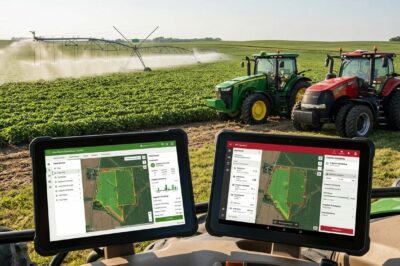
John Deere vs Case IH Irrigation Platform for Soybeans: Operations Center vs AFS Connect and What Each Actually Manages
Key Takeaways John Deere vs Case IH irrigation platform for soybeans is a question that requires one clarification upfront: neither John Deere nor Case IH makes the irrigation hardware. Valley, Reinke, and Lindsay/Zimmatic manufacture the center pivots that irrigate the majority of U.S. soybean acres. What John Deere and Case IH offer are farm management…
-

Precision Ag Add-Ons That Increase Soybean Yield Most per Dollar Invested
Key Takeaways: The highest ROI precision ag investments for irrigated soybean operations are ET-based irrigation scheduling (fastest payback), soil moisture sensors (best water management intelligence), and yield mapping (essential data foundation for all other precision decisions) VRI hardware has the largest absolute yield potential but the narrowest field-specific justification — it pays back well on…
-

Valley ICON Alarm Codes: What AgSense 365 Alerts Mean and How to Respond
Key Takeaways: Valley ICON panels do not communicate through a numbered fault code list — they report alarm conditions as descriptive text states that AgSense 365 converts into push notifications and email alerts delivered to your smartphone. Understanding what each alert category means, what condition triggered it, and what the correct response is determines whether…
-

Upgrading from Basic Timers to ET-Based Control: What It Costs and What It Returns
Key Takeaways: A timer-based center pivot schedule from 2005 is still running on thousands of commercial soybean operations across the US Corn Belt — applying fixed run times on fixed intervals regardless of whether last week’s rainfall was 0.1 inches or 1.5 inches, regardless of whether the temperature was 75°F or 98°F, and regardless of…
-

Adding GPS and Telemetry to Older Center Pivots: AgSense Field Commander vs Native Panels
Key Takeaways: The pivot structural systems installed on US soybean farms in the 1990s and early 2000s — many still in good mechanical condition with decades of useful life remaining — were built without the GPS positioning, cellular telemetry, and remote management capability that commercial soybean production now requires. Running a commercial soybean irrigation operation…
-

API Integration Between Irrigation Controllers and Farm Management Software: Building a Unified Soybean Operations Platform
Key Takeaways Irrigation controller API integration for farm management connects what would otherwise be isolated data systems into a single operational picture for commercial soybean production. Without integration, a grower managing irrigation through Lindsay FieldNET and field operations through John Deere Operations Center maintains two separate records of the same season — planting dates entered…
-

Building a LoRaWAN IoT Network for Commercial Soybean Irrigation: Protocol Fundamentals and Deployment Planning
Key Takeaways A LoRaWAN IoT soybean irrigation network is the infrastructure layer that connects every soil sensor, weather station, and SDI valve node across a commercial operation into a unified data system without the recurring cost of cellular subscriptions for each device. Understanding the protocol’s device classes, network architecture options, and deployment planning requirements is…
-

LoRa and Cellular Telemetry Options for Remote Pivot Monitoring: Choosing the Right Network for Your Farm
Key Takeaways LoRa cellular telemetry center pivot monitoring is not a choice between two competing technologies — it is a question of where each technology’s strengths align with the specific connectivity challenges of a commercial soybean operation. Cellular networks built for smartphone users were not designed around the density, geographic distribution, and power constraints of…
-

Cropwise Irrigation by Syngenta: How Decision-Support Platforms Help Soybean Farmers Schedule Irrigation Events
Key Takeaways Cropwise is Syngenta’s cloud-based digital farming platform — it does not manufacture irrigation hardware but uses satellite imagery, AI weather modeling, and integrated soil sensors to tell soybean growers when and where to irrigate. The platform uses NDWI (Normalized Difference Water Index) satellite data to detect early canopy water stress in soybean fields…
-

AgSense Field Commander: Remote Pivot Monitoring and Control for Midwest Soybean Operations
Key Takeaways AgSense Field Commander center pivot monitoring gives soybean growers remote visibility and control over their pivot fleet without replacing existing control panels. The hardware mounts at the end tower, connects to the existing panel’s control circuit, and communicates through the cellular network to the AgSense 365 cloud platform and mobile app. A grower…
Follow Us
Recent Posts
- Pressure Compensating vs Non-PC Emitters for Soybean SDI: When You Need PC and When You Don’t

- GPS vs Traditional Pivot Guidance for Soybeans: Accuracy, Maintenance, and Upgrade Economics

- John Deere vs Case IH Irrigation Platform for Soybeans: Operations Center vs AFS Connect and What Each Actually Manages

- T-L Irrigation Pricing for Soybeans: What Drives System Cost and How to Compare Per-Acre Investment

- Pivot Wheel Track Compaction and Soybean Yield: Impact, Measurement, and Management
