
Key Takeaways
- Understanding the disease triangle helps forecast and manage soybean health issues effectively.
- Early detection through regular scouting is crucial for effective disease and pest management.
- Integrated pest management combines various strategies for sustainable, long-term crop protection.
- Staying informed about emerging threats and adapting management practices is essential in the face of climate change and global trade.
- Developing a customized soybean health plan tailored to your specific field conditions and history is key to successful disease and pest management.
Soybean Disease and Pest Management
Soybean production in the United States faces constant challenges from a wide array of diseases and pests. As farmers, the ability to identify and effectively manage these threats is crucial for maintaining healthy crops and maximizing yields.
This comprehensive guide examines the most significant soybean diseases and pests, providing you with the knowledge and tools to identify, prevent, and control these issues in your fields.
Soybean Diseases and Pests covered in this article
Diseases
| Disease | Identification | Management Strategies |
|---|---|---|
| Soybean Rust | Small, reddish-brown lesions on leaf undersides; pustules with spores. | Field scouting, resistant varieties, fungicide application, and good field hygiene. |
| Sudden Death Syndrome (SDS) | Interveinal chlorosis and necrosis; vascular tissue discoloration in stems. | Plant resistant varieties, improve drainage, seed treatments, and SCN management. |
| Soybean Cyst Nematode (SCN) | Small white to brown cysts on roots; stunted growth and yellowing leaves. | Soil sampling, resistant varieties, crop rotation, and seed treatments. |
| Phytophthora Root and Stem Rot | Brown stem lesions, wilting, and darkened taproots. | Use resistant varieties, improve drainage, and seed treatments with metalaxyl or mefenoxam. |
| Charcoal Rot | Gray discoloration in stems and roots; charcoal-like microsclerotia inside stems. | Irrigation, crop rotation, reducing plant stress, and soil fertility management. |
| Frogeye Leaf Spot | Circular lesions with tan centers and red-brown borders. | Resistant varieties, crop rotation, fungicides, and good field hygiene. |
Pests
| Pest | Identification | Management Strategies |
|---|---|---|
| Soybean Aphid | Small yellow-green aphids clustering on leaves and stems. | Resistant varieties, natural predators, judicious insecticides, and scouting. |
| Bean Leaf Beetle | Oval beetles with black triangle behind thorax; leaf and pod damage. | Crop rotation, seed treatments, insecticides, and trap crops. |
The Disease Triangle: Understanding Pathogen-Host-Environment Interactions
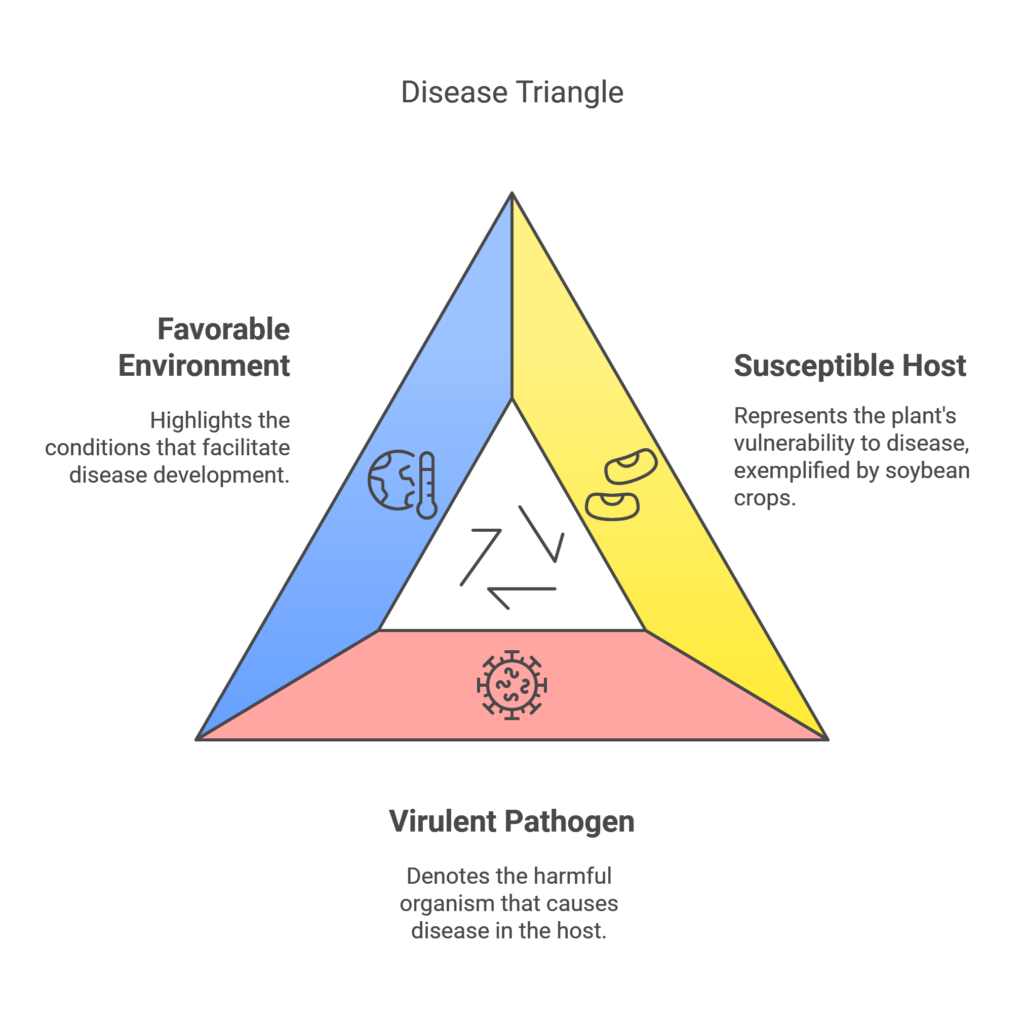
Before we cover specific diseases and pests, it’s essential to grasp the concept of the disease triangle. This fundamental principle in plant pathology illustrates that disease development needs the interaction of three key components: a susceptible host (soybeans), a virulent pathogen, and favorable environmental conditions.
Understanding this relationship allows us to better forecast and manage disease outbreaks in soybean crops. The disease triangle concept has practical applications in developing integrated pest management (IPM) strategies.
For example, selecting resistant soybean varieties addresses the host component.
Implementing crop rotation disrupts the pathogen’s lifecycle, while adjusting planting dates can help avoid environmental conditions conducive to disease development.
One challenge in applying the disease triangle concept is the dynamic nature of these interactions. Pathogens evolve, environmental conditions shift because of climate change, and new soybean varieties are continually developed. Staying informed about these changes is crucial for effective disease management.
Soybean Rust: The Global Threat
Soybean rust, caused by the fungus Phakopsora pachyrhizi, exemplifies how global trade and changing climate patterns can introduce new threats to US soybean production. First detected in the continental United States in 2004, this disease has the potential to cause yield losses of up to 80% in severe cases.
Soybean Rust Symptoms
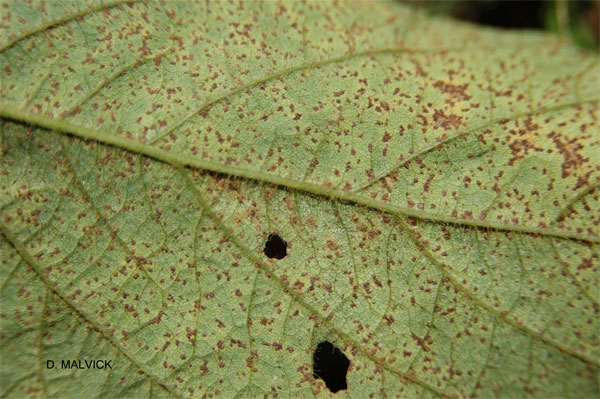
Early identification of soybean rust is critical for effective management. Look for small, brown to reddish-brown lesions on the undersides of leaves, which gradually enlarge and turn tan to dark brown.
As the disease progresses, pustules form within these lesions, producing spores that can rapidly spread the infection.
Managing Soybean Rust
To effectively manage soybean rust:
- Regular field scouting is essential, with particular attention to the lower canopy where symptoms first appear.
- Utilize disease forecasting tools to stay ahead of potential outbreaks. Many state extension services provide real-time monitoring and prediction models.
- Consider planting resistant varieties, especially in high-risk areas. While finish resistance is not yet available, some varieties show improved tolerance.
- Apply foliar fungicides preventatively or at the first sign of disease. Follow local extension recommendations for timing and product selection. Triazole and strobilurin fungicides, or mixtures containing both, have shown effectiveness.
- Maintain good field hygiene by removing volunteer soybeans and alternative hosts Hosts like kudzu and others can harbor the pathogen between growing seasons.
Soybean rust spores can travel long distances on wind currents. Staying informed about disease progression in neighboring states or regions allows us to anticipate potential threats to our crops.
Collaboration with neighboring farmers and participation in regional monitoring networks can significantly enhance our ability to respond quickly to outbreaks.
Sudden Death Syndrome: The Deceptive Destroyer
Sudden Death Syndrome (SDS), caused by the soil-borne fungus Fusarium virguliforme, presents a unique challenge because of it’s ability to significantly impact yields without early obvious symptoms. The name ‘sudden death’ is somewhat misleading, as the fungus infects plants early in the season but symptoms typically don’t appear until reproductive stages.
Sudden Death Syndrome Symptoms
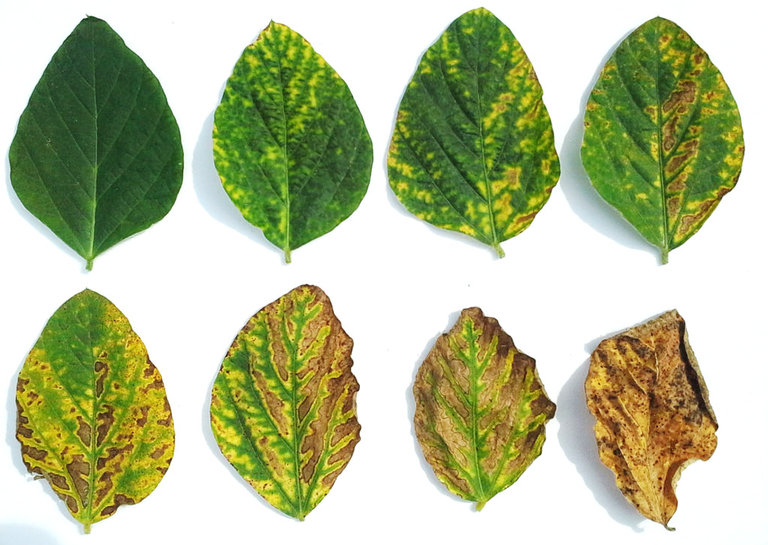
Identifying SDS needs careful observation. Look for interveinal chlorosis and necrosis on leaves, where leaf tissue dies while veins stay green.
As the disease progresses, premature defoliation occurs.
To confirm SDS, split the stem lengthwise and look for brown discoloration of the vascular tissue, which distinguishes it from other foliar diseases.
Controlling Sudden Death Syndrome
Managing SDS effectively involves a multi-faceted approach:
- Plant resistant varieties, which have shown significant promise in reducing disease impact. Consult with local seed dealers and extension specialists to identify the best options for your region.
- Improve field drainage and reduce soil compaction. SDS thrives in cool, wet conditions, so well-drained soils can help mitigate risk.
- Use seed treatments with specific activity against SDS. Products containing fluopyram have shown effectiveness in reducing early-season infection.
- Consider delayed planting in high-risk fields. Cooler, wetter soil conditions early in the season favor infection, so planting when soils have warmed can reduce disease pressure.
- Implement crop rotation with non-host crops like corn or wheat. While this doesn’t eliminate the pathogen from soil, it can help reduce inoculum levels.
- Manage soil fertility carefully. Balanced nutrition, particularly adequate potassium levels, can help plants withstand SDS pressure.
SDS often occurs in conjunction with soybean cyst nematode (SCN) infestations. Managing SCN populations can indirectly help reduce the severity of SDS in your fields.
This interaction underscores the importance of a holistic approach to soybean health management.
Soybean Cyst Nematode: Symptoms of The Hidden Yield Robber
The soybean cyst nematode (SCN), Heterodera glycines, is considered the most economically damaging pest of soybeans in the United States. SCN’s ability to cause significant yield losses without obvious above-ground symptoms has earned it the moniker ‘the silent yield robber.’
Soybean Cyst Nematode Indentification
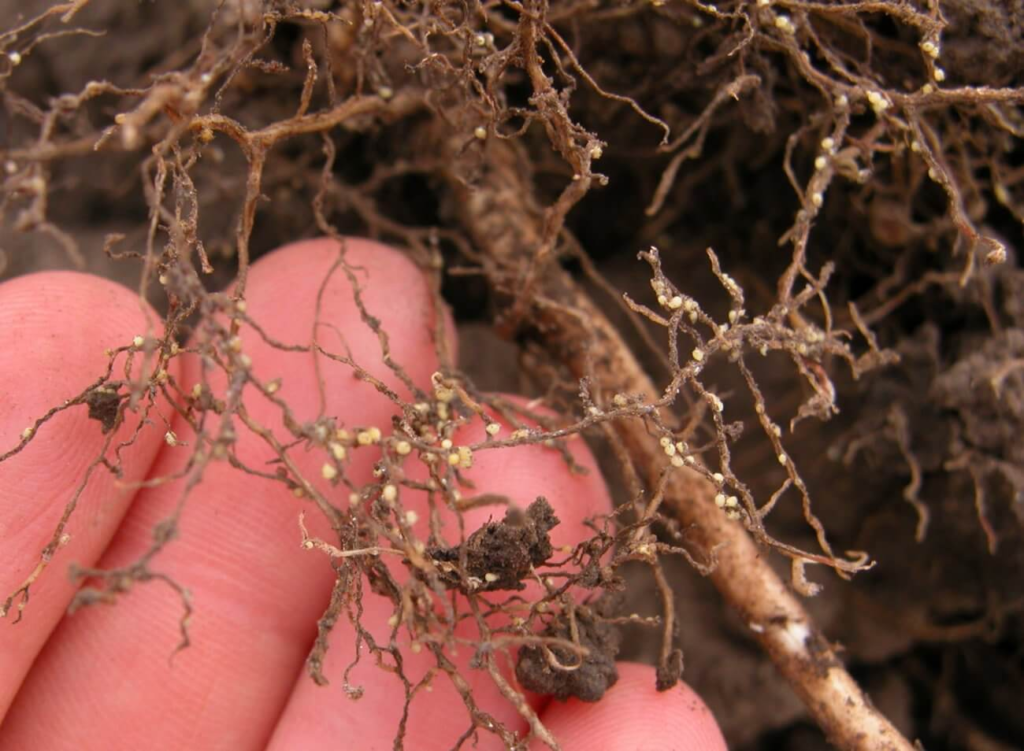
Identifying SCN infestations needs both field observation and soil testing. Above-ground symptoms can be subtle and easily confused with other issues, such as nutrient deficiencies.
These may include stunted growth, yellowing of leaves, and uneven plant height across the field.
The most definitive sign is the presence of small, white to brown cysts on the roots, visible to the naked eye.
Managing Soybean Cyst Nematode
To effectively manage SCN:
- Implement a robust soil sampling program to monitor nematode population levels. Fall sampling after harvest provides the most accurate picture of SCN populations.
- Rotate resistant soybean varieties, being sure to switch up the sources of resistance to prevent the development of resistant SCN populations. The most common source of resistance, PI 88788, is becoming less effective in many areas because of overuse.
- Practice crop rotation with non-host crops like corn or wheat to reduce nematode populations. A minimum of two years between soybean crops is recommended in heavily infested fields.
- Consider using nematode-protectant seed treatments, especially in fields with high SCN pressure. These can provide early-season protection and help establish a strong stand.
- Maintain optimal soil fertility and pH. Healthy plants are better able to withstand SCN pressure.
- Manage weeds effectively, as some species like henbit and purple deadnettle can serve as alternative hosts for SCN. SCN populations can vary significantly within a field. Use grid or zone sampling to create detailed SCN distribution maps, allowing for targeted management strategies.
This precision approach can help optimize inputs and improve overall field management.
Phytophthora Root and Stem Rot: The Water-Loving Menace
Phytophthora root and stem rot, caused by the fungus-like micro-organism (oomycete) Phytophthora Sojae, is a significant threat to soybean production, especially in poorly drained or compacted soils. This disease can cause substantial yield losses and even finish crop failure in severe cases.
Phytophthora Root and Stem Rot Symptoms

Symptoms of Phytophthora root and stem rot can appear at any growth stage. In seedlings, look for rapid wilting and death, often with a distinctive brown lesion extending up the stem from the soil line.
In older plants, symptoms include yellowing and wilting of leaves, brown stem lesions, and eventual plant death.
The taproot will appear dark brown and rotted.
Managing Phytophthora Root and Stem Rot
Effectively managing Phytophthora needs an integrated approach:
- Select resistant varieties. Many soybean varieties carry Rps genes (Resistance to Phytophthora sojae) which are used to manage Phytophthora. However, the pathogen can overcome these genes over time, so it’s crucial to rotate resistance genes.
- Improve field drainage. Installing tile drainage, reducing compaction, and avoiding practices that create hardpans can significantly reduce disease pressure.
- Use seed treatments. Metalaxyl and mefenoxam are effective against early-season Phytophthora infections.
- Practice crop rotation. Sojae specifically infects soybeans, rotation can help improve soil structure and drainage.
- Consider raised beds or ridge-till systems in problem fields to improve drainage around the seed zone.
- Adjust planting dates. In fields with a history of Phytophthora, delaying planting until soils are warmer and drier can reduce disease incidence.
- Monitor soil fertility. Maintaining proper pH and nutrient levels, especially potassium, can help plants withstand infection.
The effectiveness of management strategies can vary depending on local conditions and pathogen populations. Regularly reassessing your approach and staying informed about new resistant varieties and management techniques is crucial for long-term success.
Charcoal Rot: The Heat-Loving Opportunist
Charcoal rot, caused by the fungus Macrophomina phaseolina, is a disease that thrives in hot, dry conditions. It can cause significant yield losses, particularly in drought-stressed soybeans.
Charcoal Rot Symptoms
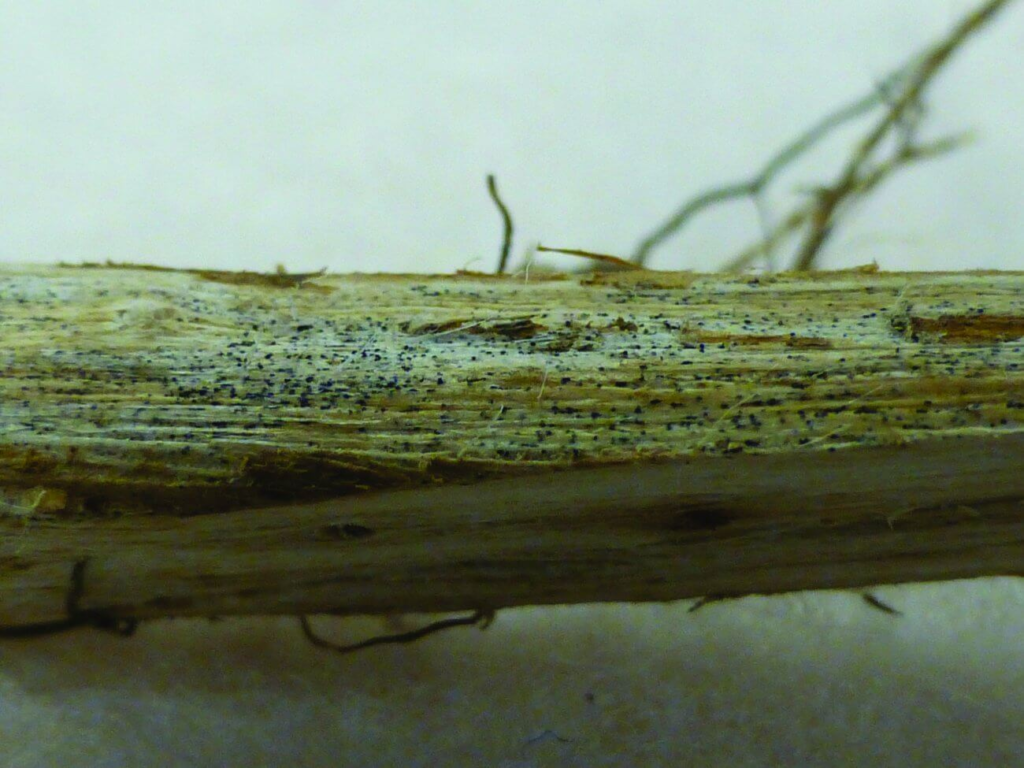
Charcoal rot symptoms often become obvious during reproductive stages, especially if plants are under drought stress. Look for:
- Wilting and yellowing of leaves, starting with the upper canopy
- Premature plant death, with leaves remaining attached
- Gray discoloration of the lower stem and taproot
- Small, black microsclerotia (fungal survival structures) visible when the stem or root is split open, giving a charcoal-like appearance
Managing Charcoal Rot
Managing charcoal rot needs a combination of cultural practices and stress reduction:
- Implement irrigation where possible. Adequate soil moisture, especially during reproductive stages, can significantly reduce disease severity.
- Practice crop rotation with non-host crops like wheat or corn. Phaseolina has a wide host range, rotation can help reduce inoculum buildup.
- Adjust planting dates. Earlier planting can allow plants to finish more of their lifecycle before peak stress periods.
- Manage plant populations. Lower plant densities can reduce competition for water and nutrients, potentially reducing stress.
- Maintain optimal soil fertility. Well-nourished plants are better able to withstand disease pressure.
- Consider using drought-tolerant varieties in areas prone to water stress.
- Implement conservation tillage practices to improve soil moisture retention.
While fungicides are generally not effective against charcoal rot, some seed treatments may provide early-season protection. The key to managing this disease comes from reducing plant stress and creating conditions unfavorable for pathogen development.
Frogeye Leaf Spot: The Foliar Foe
Frogeye leaf spot, caused by the fungus Cercospora sojina, is a foliar disease that can cause significant yield losses, particularly in warm, humid environments.
Frogeye Leaf Spot Symptoms
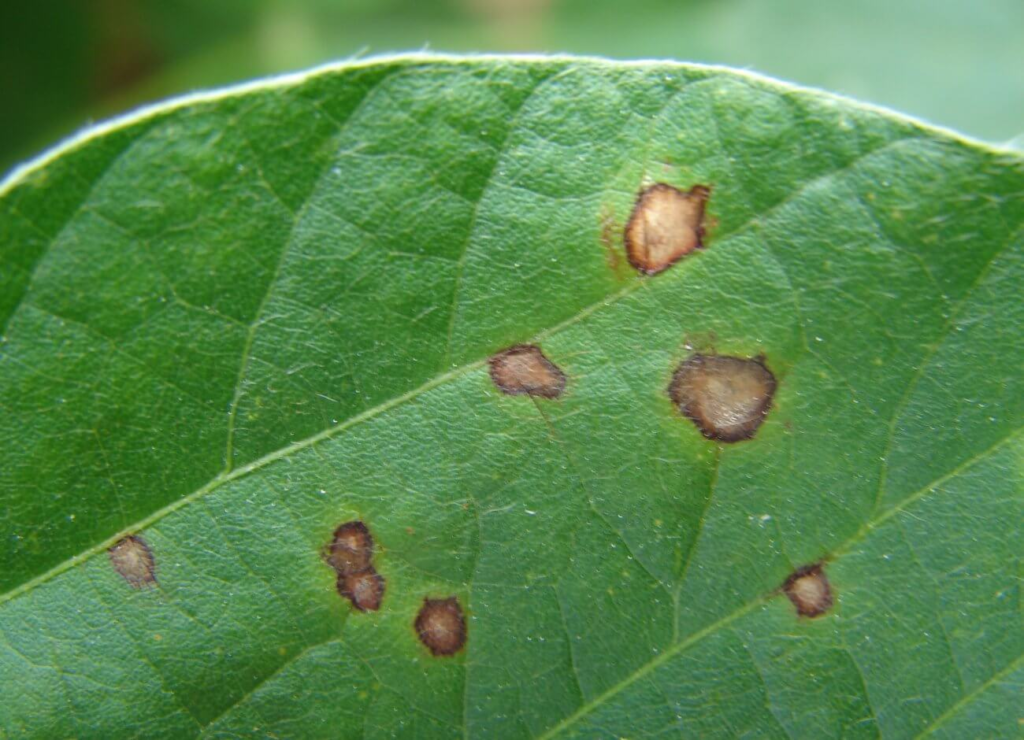
Frogeye leaf spot is characterized by:
- Circular to angular lesions on leaves, with gray or tan centers and reddish-brown borders
- Lesions that can coalesce, leading to leaf blighting and premature defoliation
- In severe cases, infection of stems and pods
Managing Frogeye Leaf Spot
Effective management of frogeye leaf spot involves:
- Planting resistant varieties. This is one of the most effective long-term strategies for managing the disease.
- Implementing crop rotation. Cercospora sojina can survive on crop residue, so rotating to non-host crops can reduce inoculum levels.
- Practicing good field hygiene. Burying or removing crop residue can help reduce overwintering inoculum.
- Applying foliar fungicides. Strobilurin fungicides have been effective, but resistance has been reported in some areas. Using fungicides with multiple modes of action is recommended.
- Scouting regularly. Early detection allows for timely fungicide applications if necessary.
- Maintaining balanced crop nutrition. Adequate potassium levels, in particular, can help reduce disease severity.
- Considering seed treatments. While primarily effective against seedling diseases, some treatments may provide early-season protection against frogeye leaf spot.
Remember that fungicide resistance in Cercospora sojina populations is an emerging concern.
Implementing integrated management strategies and avoiding over-reliance on a single control method is crucial for sustainable disease management.
Soybean Aphid: The Sap-Sucking Invader
The soybean aphid (Aphis glycines) is an invasive pest that can cause significant yield losses through direct feeding damage and virus transmission.
Soybean Aphid and Damage Identification

Soybean aphids are small, pear-shaped insects that can be identified by:
- Pale yellow to light green coloration
- Black cornicles (tube-like structures) on the rear of the abdomen
- Clustering on young leaves, stems, and pods
Managing Soybean Aphids
Managing soybean aphids effectively needs an integrated approach:
- Scout fields regularly, especially during vegetative and early reproductive stages. Use an economic threshold of 250 aphids per plant to guide treatment decisions.
- Plant resistant varieties. Several soybean varieties with Rag genes for aphid resistance are available.
- Preserve natural enemies.Ladybugs, lacewings, and parasitic wasps can help keep aphid populations in check. Avoid unnecessary insecticide applications that might harm these useful insects.
- Apply insecticides judiciously. When thresholds are reached, timely application of labeled insecticides can prevent yield loss. Be aware of potential resistance issues and rotate insecticide modes of action.
- Consider seed treatments. Neonicotinoid seed treatments can provide early-season protection against aphids.
- Manage alternative hosts. Buckthorn, the overwintering host for soybean aphids, can be removed from field margins where practical.
- Adjust planting dates. Early-planted soybeans may escape peak aphid populations in some regions.
Soybean aphid populations can vary greatly from year to year and even field to field. Regular scouting and staying informed about regional aphid forecasts can help guide management decisions.
Bean Leaf Beetle: The Pod Predator
The bean leaf beetle (Cerotoma trifurcata) is a pest that can cause damage throughout the growing season, from seedling defoliation to pod feeding.
Bean Leaf Beetle and Damage Identification


Bean leaf beetles can be identified by:
- Oval shape, about 1/4 inch long
- Variable coloration, typically yellowish to reddish-brown with black spots
- A distinctive black triangle behind the thorax
Damage appears as:
- Round holes in leaves, giving a shot-hole appearance
- Scarring and feeding damage on pods, which can lead to seed quality issues
Managing Bean Leaf Beetle
Effective management of bean leaf beetles includes:
- Regular scouting, especially during early vegetative stages and again during pod fill. Use economic thresholds to guide treatment decisions.
- Considering delayed planting. Early-planted soybeans often attract overwintering beetles and can suffer more damage.
- Using seed treatments. Neonicotinoid seed treatments can provide early-season protection against bean leaf beetles.
- Applying foliar insecticides when thresholds are reached. Be mindful of the pre-harvest interval when treating during pod fill.
- Practicing crop rotation. While not a finish solution, rotation can help reduce local beetle populations.
- Managing alternative hosts. Controlling wild legumes in field margins can reduce overwintering sites for beetles.
- Considering trap crops. Planting a small area of early-maturing soybeans can attract beetles away from the main crop.
Bean leaf beetles can also send bean pod mottle virus, making their management crucial not just for direct feeding damage and for disease prevention.
Integrated Pest Management: A Holistic Approach to Soybean Health
While we’ve covered some of the most significant diseases and pests affecting soybeans, it’s crucial to approach crop protection from a holistic, integrated pest management (IPM) perspective. IPM combines various control methods to manage pests and diseases effectively while minimizing environmental impact and economic costs.
Key components of an effective soybean IPM strategy include:
- Regular field scouting and monitoring to detect issues early. Develop a systematic scouting plan that covers your entire acreage throughout the growing season.
- Utilizing economic thresholds to make informed treatment decisions. These thresholds help balance the cost of control measures against potential yield losses.
- Implementing cultural practices like crop rotation and adjusting planting dates. These practices can disrupt pest lifecycles and reduce disease pressure.
- Selecting resistant varieties appropriate for your region and pest pressures. Stay informed about new varieties and their resistance profiles.
- Judicious use of chemical controls when necessary, following all label instructions and local regulations. Rotate modes of action to prevent resistance development.
- Preserving and enhancing natural enemy populations. Create habitat for useful insects and avoid broad-spectrum insecticide applications when possible.
- Maintaining detailed records of pest populations, treatments, and outcomes. This information is invaluable for refining your management strategies over time.
- Staying informed about emerging threats and new management techniques. Attend extension workshops, industry events, and connect with local crop advisors.
One challenge in implementing IPM is balancing short-term pest control with long-term sustainability. For example, while foliar fungicides can effectively manage certain diseases, overuse can lead to fungicide resistance.
Striking the right balance needs ongoing education and adaptation of management strategies.
Emerging Threats and Future Challenges
As we continue to refine our soybean disease and pest management strategies, it’s important to stay informed about emerging threats and future challenges. Climate change is altering the distribution and severity of many soybean diseases and pests.
For instance, warmer winters may allow certain pests to survive in regions where they were previously limited by cold temperatures.
Additionally, the global nature of agricultural trade increases the risk of introducing new pathogens or pests to soybean-growing regions. Some emerging concerns include:
- Soybean gall midge: A relatively new pest causing significant damage in parts of the Midwest.
- Tar spot: While primarily a corn disease, there’s concern it could adapt to soybeans.
- New soybean rust races: The potential for more aggressive or resistant strains of the pathogen.
- Increasing insecticide and herbicide resistance: Requiring new management strategies and chemistries.
- Shifting pest dynamics because of climate change: Potentially longer seasons for some pests and new overwintering zones.
Staying connected with your local extension service, participating in industry events, and engaging in farmer networks can help you stay ahead of these emerging threats. Consider participating in on-farm trials or collaborating with researchers to test new management strategies or varieties.
Practical Exercise: Developing a Customized Soybean Health Plan
To reinforce the concepts we’ve covered, let’s create a customized soybean health plan for your farm:
- List the top three disease or pest concerns based on your field history and local conditions.
- For each concern, outline at least three management strategies you plan to apply.
- Create a scouting schedule, detailing when and how you’ll monitor for each issue throughout the growing season.
- Research and list any new varieties or management techniques you’d like to trial on a small scale next season.
- Identify potential collaborators or resources (e.g., local extension, crop consultants) who can support your management efforts.
- Develop a record-keeping system to track pest pressures, management actions, and outcomes across your fields.
- Set specific goals for yield protection and input optimization related to pest and disease management.
By completing this exercise, you’ll have a tailored plan that combines the advanced knowledge we’ve discussed into practical, actionable steps for your operation.
Frequently Asked Questions

What are the most common soybean diseases in the United States?
The most common soybean diseases in the U.S. include soybean cyst nematode, sudden death syndrome, Phytophthora root and stem rot, charcoal rot, and frogeye leaf spot. The prevalence of these diseases can vary by region and growing conditions.
How does crop rotation help manage soybean pests and diseases?
Crop rotation helps break pest and disease cycles by removing the host plant (soybeans) for one or more seasons. This can reduce pathogen inoculum levels in the soil and disrupt the life cycles of soybean-specific pests.
Are there organic methods for controlling soybean aphids?
Organic methods for controlling soybean aphids include promoting natural enemies, using approved organic insecticides like neem oil or pyrethrin, and implementing cultural practices like adjusting planting dates and using resistant varieties.
How does climate change affect soybean diseases and pests?
Climate change can alter the geographic range of pests and diseases, potentially introducing new threats to regions. It can also affect the timing of pest emergence and the severity of disease outbreaks because of changes in temperature and precipitation patterns.
What’s the difference between qualitative and quantitative disease resistance in soybeans?
Qualitative resistance, often controlled by single genes (like Rps genes for Phytophthora resistance), provides finish protection against specific races of a pathogen. Quantitative resistance, controlled by multiple genes, provides partial resistance against all races of a pathogen and is often more durable.
How effective are seed treatments in managing soybean diseases?
Seed treatments can be highly effective in protecting against early-season diseases and pests. They’re particularly useful for managing seedling diseases, early-season insects, and can provide some protection against soybean cyst nematode and sudden death syndrome.
What role do useful insects play in soybean pest management?
Beneficial insects like ladybugs, lacewings, and parasitic wasps play a crucial role in natural pest control. They can help keep populations of pests like soybean aphids and bean leaf beetles in check, reducing the need for chemical interventions.
How can I determine if my soybeans have a nutrient deficiency or a disease?
Distinguishing between nutrient deficiencies and diseases often needs careful observation and sometimes laboratory testing. Look for patterns in the field, the specific appearance of symptoms, and consider the field’s history.
Soil and tissue testing can help confirm nutrient status.
What’s the best way to scout for soybean cyst nematode?
The best way to scout for soybean cyst nematode is through regular soil sampling. Fall sampling after harvest is ideal.
Dig root samples during the season to look for cysts, and watch for subtle above-ground symptoms like stunting or yellowing, especially in circular patterns in the field.
How do I choose the right soybean variety for disease resistance?
Choosing the right variety involves considering your field history, local disease pressures, and yield goals. Consult with local extension specialists, seed dealers, and review university variety trial results.
Consider varieties with multiple sources of resistance for key diseases in your area.





Leave a Reply