
Key Takeaways
Frogeye leaf spot (FLS) is a common soybean disease caused by the fungus Cercospora sojina.
FLS can cause yield losses up to 35%, especially if the outbreak occurs early in the growing season.
Environmental conditions like high humidity and frequent precipitation increase the risk of FLS.
Traditional irrigation methods can exacerbate FLS, while smart irrigation technology offers a promising solution.
Implementing smart irrigation involves using sensors, automated systems, and data analysis to optimize water usage and reduce disease risk.
Understanding Soybean Frogeye Leaf Spot
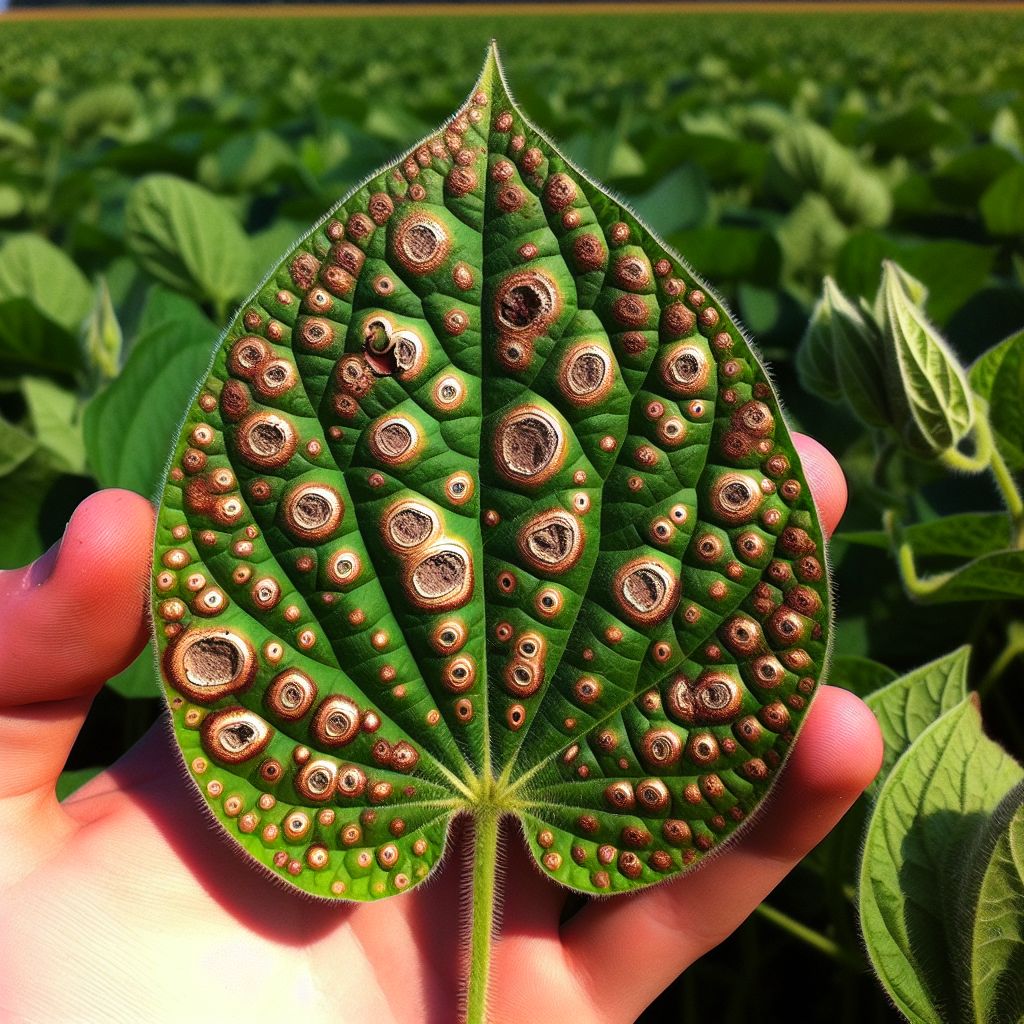
Frogeye leaf spot (FLS) is a foliar disease that primarily affects soybean crops. It’s caused by the fungus Cercospora sojina, which thrives in humid and warm conditions. The disease manifests as small, circular lesions on the leaves, which can expand and merge, leading to significant defoliation and yield loss.
Farmers who have dealt with FLS know how quickly it can spread and devastate a crop. Therefore, understanding its signs and symptoms is crucial for early detection and management.
Identifying Frogeye Leaf Spot
FLS lesions usually appear on the upper canopy of soybean plants. Initially, these lesions are small, dark, and water-soaked. As they develop, they become larger, more angular, and lighter in color. The center of the lesions often turns gray or tan, surrounded by a dark brown or purple border.
Besides the visual symptoms, it’s essential to monitor the environmental conditions that favor the disease. Frequent rainfall, high humidity, and temperatures between 77°F and 86°F create an ideal environment for FLS to thrive.
Impact on Yield and Quality
FLS can cause significant yield losses, particularly if the disease appears early in the growing season. Yield losses can reach up to 35% in severe cases. The disease affects the plant’s ability to photosynthesize efficiently, leading to reduced pod and seed development.
Moreover, the quality of the harvested soybeans can also be compromised. Severely infected plants produce smaller and lower-quality beans, which can affect market prices and overall profitability.
Factors Contributing to Disease Development
Several factors contribute to the development and spread of FLS. Understanding these factors can help farmers implement effective management strategies, such as using soil moisture sensors for precision agriculture:
Environmental Conditions: High humidity, frequent precipitation, and warm temperatures are the primary conditions that favor FLS.
Field History: Fields with a history of FLS are at higher risk, especially if the same soybean variety is planted repeatedly.
Crop Rotation: Continuous soybean cropping or short rotations between soybean crops can increase disease pressure.
Tillage Practices: Conservation or no-tillage practices can leave infected residue on the soil surface, promoting disease spread.
“Fields that are continuously soybean, have short rotations between soybean crops, are conservation or no-tillage, are planted with a susceptible variety, or have a history of FLS are also at a greater risk for infection.”
How Irrigation Affects Frogeye Leaf Spot
Irrigation practices play a crucial role in the development and spread of FLS. Overhead irrigation, in particular, can create a conducive environment for the disease by increasing leaf wetness and humidity. This method can splash fungal spores onto healthy plants, accelerating the spread of the disease.
Current Irrigation Practices and Challenges
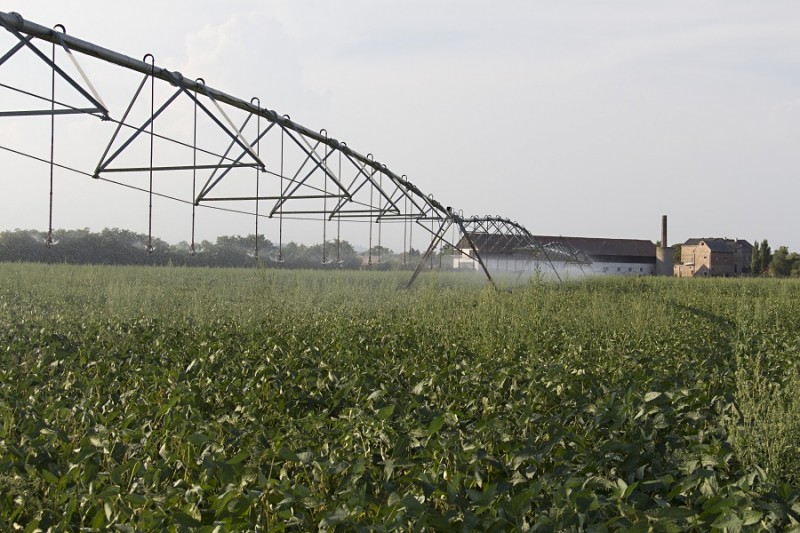
“Water use and irrigation in soybean …” from www.legumehub.eu
Traditional irrigation methods, such as overhead and flood irrigation, have been widely used in soybean farming. However, these methods can inadvertently contribute to the spread of FLS and other foliar diseases. Understanding the limitations and challenges of these practices is essential for developing better disease management strategies.
“Reports of FLS in soybeans emerge quickly when humidity and temperatures increase. The most likely conditions to contribute to infection include frequent bouts of precipitation and/or overhead irrigation.”
Traditional Irrigation Methods
Overhead irrigation is one of the most common methods used in soybean farming. It involves spraying water over the crop, simulating natural rainfall. While this method is effective in providing water to the plants, it also increases the risk of disease spread. For more advanced techniques, consider using wireless soil moisture sensors to optimize irrigation and reduce disease risks.
Another traditional method is flood irrigation, where fields are flooded with water. This method can also promote disease development by creating a moist environment that favors fungal growth. For sustainable soybean farming, consider using automated irrigation control systems.
Issues with Overhead Irrigation
Overhead irrigation can exacerbate FLS by creating prolonged leaf wetness. When leaves remain wet for extended periods, the fungal spores have more time to infect the plant tissue. Additionally, the splashing water can spread spores from infected plants to healthy ones, accelerating the disease’s spread.
Moreover, overhead irrigation can lead to uneven water distribution, resulting in some areas receiving too much water while others receive too little. This inconsistency can stress the plants and make them more susceptible to diseases.
What is Smart Irrigation?
Smart irrigation is an advanced method of watering crops that utilizes technology to optimize water usage. Unlike traditional irrigation systems, smart irrigation uses sensors, weather data, and automated systems to deliver the right amount of water at the right time. This approach not only conserves water but also helps in maintaining the optimal conditions for crop growth, thereby reducing the risk of diseases like frogeye leaf spot.
Benefits of Smart Irrigation for Disease Control
Implementing smart irrigation systems can significantly reduce the incidence of frogeye leaf spot in soybean crops. Here are some of the key benefits:
Reduced Leaf Wetness: Smart irrigation systems minimize the duration of leaf wetness, which is a critical factor in the development of frogeye leaf spot.
Optimized Water Usage: By delivering water directly to the root zone, smart irrigation reduces the chances of water splashing onto leaves, thereby limiting the spread of fungal spores.
Environmental Monitoring: These systems continuously monitor environmental conditions, allowing for real-time adjustments to irrigation schedules based on humidity, temperature, and soil moisture levels.
Data-Driven Decisions: Farmers can use data collected from smart irrigation systems to make informed decisions about crop management, further reducing the risk of disease.
Components of a Smart Irrigation System
A smart irrigation system comprises several components that work together to optimize water usage and control disease. Here are the main components:
Sensors: These devices measure soil moisture, temperature, and humidity. They provide real-time data to the irrigation controller.
Weather Stations: Smart irrigation weather stations collect local weather data, including rainfall, temperature, and wind speed, to adjust irrigation schedules accordingly.
Irrigation Controllers: These are the brains of the system. They use data from sensors and weather stations to determine when and how much to water.
Automated Valves and Sprinklers: These components execute the irrigation schedules set by the controller, ensuring precise water delivery.
Data Management Software: This software collects and analyzes data from the entire system, providing actionable insights for farmers.
Implementing Smart Irrigation to Combat Frogeye Leaf Spot

“Smart Farm Weather Stations …” from www.rikasensor.com
Now that we understand the components and benefits of smart irrigation, let’s explore how to implement this technology to limit frogeye leaf spot.
Sensors and Monitoring Tools
The first step in implementing smart irrigation is to install sensors and monitoring tools in your fields. These devices will provide real-time data on soil moisture, temperature, and humidity, which are crucial for managing irrigation schedules.
Place soil moisture sensors at various depths to get a comprehensive understanding of soil water content. Temperature and humidity sensors should be placed in the canopy to monitor the microclimate around the soybean plants.
“Environmental conditions, field susceptibility and disease severity should all be considered when choosing a management plan for your field.”
Optimizing Water Usage
Once the sensors are in place, the next step is to optimize water usage. Smart irrigation systems use data from sensors to determine the precise amount of water needed by the plants. This approach ensures that water is delivered directly to the root zone, reducing the risk of leaf wetness and subsequent disease development.
Automated Irrigation Systems
Automated irrigation systems are essential for implementing smart irrigation. These systems use data from sensors and weather stations to create dynamic irrigation schedules that adjust in real-time. Automated valves and sprinklers then execute these schedules, ensuring that water is applied efficiently and effectively.
Data Analysis and Decision-Making
Data collected from sensors and weather stations can be analyzed using specialized software to provide actionable insights. This data helps farmers make informed decisions about irrigation, fertilization, and disease management.
Monitor Trends: Analyze data to identify trends in soil moisture, temperature, and humidity. Use this information to adjust irrigation schedules and prevent disease outbreaks.
Predict Disease Risk: Use environmental data to predict periods of high disease risk and take preventive measures accordingly.
Optimize Resources: Allocate water and other resources more efficiently based on data-driven insights, reducing waste and improving crop health.
Practical Tips for Adopting Smart Irrigation
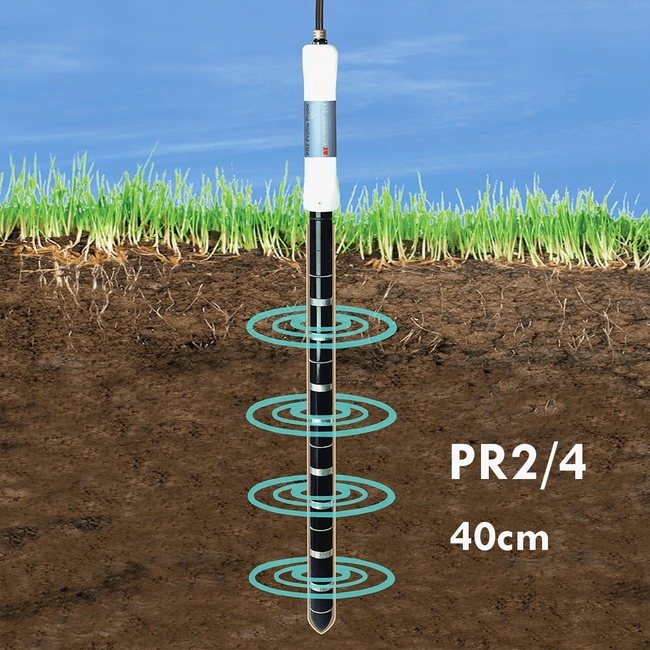
“Soil moisture sensors for irrigation …” from extension.umn.edu
Adopting smart irrigation technology can seem daunting, but with the right approach, it can be a seamless process. Here are some practical tips to help you get started:
For instance, understanding how to use soil moisture sensors can greatly enhance your irrigation management.
Evaluating Your Farm’s Needs
The first step is to evaluate your farm’s specific needs. Consider factors such as soil type, crop variety, and existing irrigation infrastructure. Understanding these factors will help you choose the right smart irrigation components for your farm.
Choosing the Right Technology
There are various smart irrigation technologies available, each with its own set of features and benefits. When choosing a system, consider the following:
Compatibility: Ensure that the components are compatible with your existing infrastructure.
Scalability: Choose a system that can be easily scaled up or down based on your farm’s size and requirements.
User-Friendliness: Opt for a system that is easy to install and operate, with user-friendly interfaces and clear instructions.
Implementation Steps
Implementing smart irrigation involves several steps:
Install Sensors: Place soil moisture, temperature, and humidity sensors in your fields.
Set Up Weather Stations: Install weather stations to collect local weather data.
Connect to Irrigation Controllers: Link the sensors and weather stations to the irrigation controllers.
Configure the System: Set up the irrigation schedules based on the data collected from the sensors and weather stations.
Monitor and Adjust: Continuously monitor the system and make adjustments as needed based on real-time data.
Maintenance and Monitoring
Regular maintenance and monitoring are essential for the effective functioning of a smart irrigation system. Here are some tips:
Regular Inspections: Conduct regular inspections of sensors, weather stations, and irrigation components to ensure they are functioning correctly.
Data Analysis: Continuously analyze data to identify any issues and make necessary adjustments.
Software Updates: Keep the software and firmware of the system updated to benefit from the latest features and improvements.
Implementation Steps
Implementing smart irrigation involves a series of well-planned steps to ensure optimal functionality and effectiveness. First, install soil moisture sensors at various depths to capture a comprehensive view of soil water content. Temperature and humidity sensors should be strategically placed in the canopy to monitor the microclimate around the soybean plants.
Next, set up weather stations to collect local weather data, including rainfall, temperature, and wind speed. This information will be crucial for adjusting irrigation schedules in real-time. Connect these sensors and weather stations to the irrigation controllers, which will use the data to determine when and how much to water.
Maintenance and Monitoring
Regular maintenance and monitoring are vital for the effective functioning of a smart irrigation system. Conduct frequent inspections of sensors, weather stations, and irrigation components to ensure they are working correctly. Continuously analyze the data collected to identify any issues and make necessary adjustments.
Additionally, keep the software and firmware of the system updated to benefit from the latest features and improvements. By staying proactive with maintenance and monitoring, you can ensure that your smart irrigation system operates efficiently and effectively, reducing the risk of frogeye leaf spot and other diseases.
Final Thoughts
Smart irrigation technology offers a promising solution for managing frogeye leaf spot in soybean crops. By optimizing water usage and reducing leaf wetness, this advanced method helps create an environment less conducive to disease development. The benefits of smart irrigation extend beyond disease control, contributing to overall water conservation and improved crop health. For more information on effective management practices for frogeye leaf spot control, visit Golden Harvest.
As we continue to face challenges in sustainable farming, adopting innovative technologies like smart irrigation will be crucial. By implementing these systems, farmers can protect their crops, enhance yield quality, and promote sustainable agricultural practices.
Recap of Smart Irrigation Benefits
Smart irrigation systems provide numerous benefits for disease management and overall crop health:
Reduced leaf wetness, minimizing the risk of frogeye leaf spot.
Optimized water usage, conserving resources and reducing waste.
Real-time environmental monitoring for informed decision-making.
Improved crop health and yield quality.
Future of Disease Management in Soybeans
The future of disease management in soybeans lies in the integration of advanced technologies like smart irrigation. As research and development continue, we can expect even more sophisticated systems that offer greater precision and efficiency. By embracing these innovations, farmers can stay ahead of disease threats and ensure the sustainability of their farming practices.
Frequently Asked Questions (FAQ)

To help you better understand the implementation and benefits of smart irrigation, here are some frequently asked questions:
What is frogeye leaf spot?
Frogeye leaf spot is a foliar disease affecting soybean crops, caused by the fungus Cercospora sojina. It manifests as small, circular lesions on the leaves, which can expand and merge, leading to significant defoliation and yield loss. Effective management of this disease can be achieved through smart irrigation management and control.
The disease thrives in warm, humid conditions and can spread rapidly if not managed properly. Early detection and effective management strategies are crucial to minimizing its impact. For more information, check out these management practices for Frogeye Leaf Spot control.
How does smart irrigation help in controlling frogeye leaf spot?
Smart irrigation helps control frogeye leaf spot by optimizing water usage and reducing leaf wetness. By delivering water directly to the root zone, these systems minimize the duration of leaf wetness, which is a critical factor in the development of the disease.
Additionally, smart irrigation systems continuously monitor environmental conditions, allowing for real-time adjustments to irrigation schedules based on humidity, temperature, and soil moisture levels.
Is smart irrigation cost-effective?
Yes, smart irrigation is cost-effective in the long run. While the initial investment may be higher than traditional irrigation methods, the benefits of water conservation, improved crop health, and reduced disease risk outweigh the costs.
Moreover, smart irrigation systems can lead to higher yields and better-quality crops, increasing overall profitability for farmers.
Can smart irrigation be implemented on any farm?
Smart irrigation can be implemented on farms of all sizes, from small family farms to large commercial operations. The key is to evaluate your farm’s specific needs and choose a system that is compatible with your existing infrastructure and scalable to your requirements.
What are the initial costs of smart irrigation?
The initial costs of smart irrigation can vary depending on the size of the farm and the specific components chosen. Generally, the costs include:
For more detailed information on the components, you can refer to automated irrigation control systems.





Leave a Reply