
-
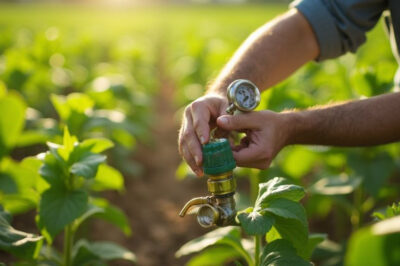
Drip Irrigation Maintenance Checklist: Flushing, Pressure Checks and Line Inspections
Key Takeaways Article Summary Drip irrigation maintenance involves scheduled inspection, cleaning, and repair of filters, emitters, pressure regulators, and distribution lines to maintain uniform water delivery and prevent expensive breakdowns during peak soybean water demand periods. A structured maintenance program saves 20-35% on water costs, extends equipment life by 5-8 years, and protects yield potential…
-
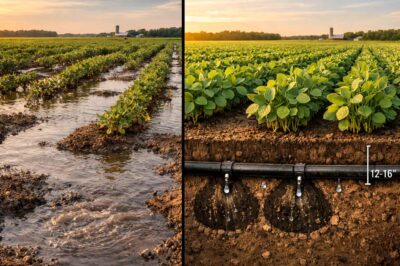
Drip Irrigation Grants and Government Funding: Complete Application Guide for Subsurface and Surface Systems
Key Takeaways Article Summary Government funding programs provide 75-90% cost-share assistance specifically for drip irrigation systems through EQIP Practice Code 441, with subsurface and surface drip installations qualifying for enhanced priority ranking due to superior water efficiency compared to sprinkler systems. These programs make high-cost drip systems ($1,800-$4,000 per acre) financially accessible to soybean and…
-
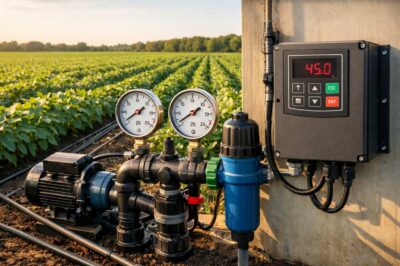
Drip Irrigation Energy Efficiency: Pump Selection & Operating Cost Guide for Soybean Farms
Key Takeaways Article Summary: Drip irrigation energy costs drop 30-50% below center pivot alternatives when pumps are properly sized for low-pressure, low-flow operation with filtration head loss calculated accurately, zone control implemented strategically, and fertigation pumps selected to match injection schedules rather than continuous operation. Why Drip Irrigation Energy Requirements Differ Fundamentally from Sprinkler Systems…
-
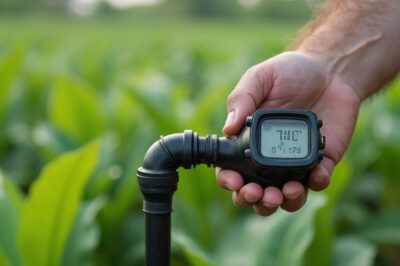
Water Usage Management with Drip Systems: Reducing Runoff & Increasing Root Zone Precision
Key Takeaways Article Summary Water usage management with drip irrigation systems involves controlling application rates, emitter spacing, and system pressure to deliver water directly to the soybean root zone while minimizing runoff and deep percolation losses. Effective management requires matching emitter flow rates to soil infiltration capacity, monitoring system performance with flow meters and pressure…
-
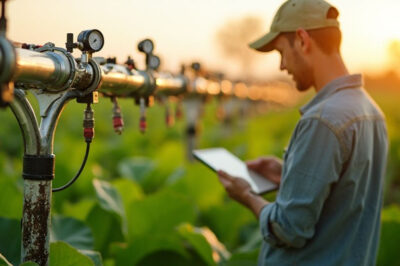
Drip Irrigation ROI for Soybeans: Water Savings, Pump Costs & Payback Models
Key Takeaways Article Summary Drip irrigation delivers strong farming ROI for soybean growers through dramatic reductions in water use (30-50% savings), pump energy costs (60-70% less than pivots), and labor time, with most systems paying for themselves in 3-5 years. The investment ranges from $500-$4,000 per acre depending on surface versus subsurface installation, but USDA…
-
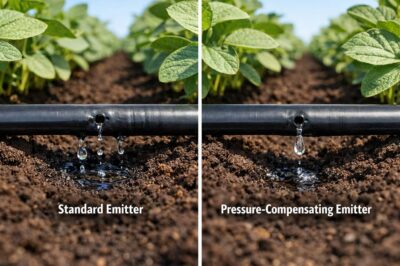
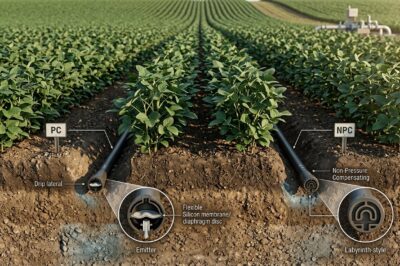
Buyer’s Guide: How to Choose the Right Dripline for Soybeans Based on Soil Type & Row Spacing
Key Takeaways Article Summary Choosing the right dripline for soybeans requires matching emitter spacing and flow rates to your specific soil type and row configuration, with clay soils needing 0.4-0.6 GPH emitters spaced 12 inches apart while sandy soils perform best with 0.9-1.0 GPH emitters at 6-8 inch spacing. Your decision between thin-wall tape ($175-300/acre,…
-
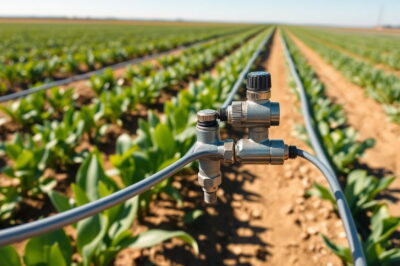
Drip Irrigation Accessories: Filters, Flush Valves, Pressure Regulators and Connectors Explained
Key Takeaways Drip irrigation accessories are the essential components that connect your water source to your soybean crop and keep the system running efficiently. These parts—including filters, pressure regulators, flush valves, and various fittings—determine whether your drip system delivers consistent water to every plant or wastes money through clogs, leaks, and uneven coverage. Understanding Your…
-
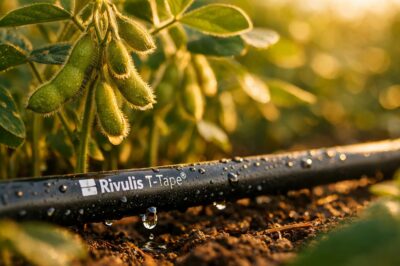
Rivulis Drip Irrigation Solutions for Soybean Farmers: T-Tape & Emitterline Performance
Key Takeaways Article Summary Rivulis drip irrigation systems offer soybean farmers flexible solutions ranging from budget-friendly T-Tape (material costs $300-500/acre, complete installation $800-1,500/acre for surface systems) to premium D5000 PC pressure-compensating dripline ($1,200-2,500/acre for standard installations). These systems deliver 90-95% application uniformity while reducing water consumption by 20-40% compared to center pivot irrigation systems. Success…
-
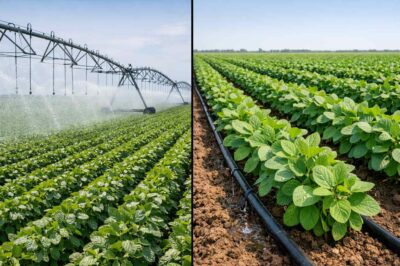
Toro Drip Irrigation Products for Row Crops: Emitter-Line Options and Reliability
Key Takeaways Article Summary Toro drip irrigation systems combine Aqua-Traxx thin-wall drip tape with advanced filtration technology to deliver precise water and nutrient application for row crops like soybeans. The Aqua-Traxx Azul line offers patented multi-stage internal filtration that provides industry-leading clog resistance, while configurable emitter spacing and flow rates let farmers match irrigation patterns…
-
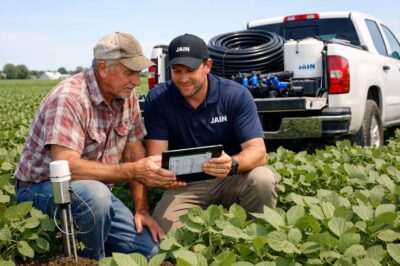
Jain Drip Irrigation Systems for Soybeans: Overview, Quality and Dealer Support
Key Takeaways Article Summary Jain offers a complete line of drip irrigation components — including pressure-compensating drippers, drip tape, filters, fertigation equipment, and manifold systems — that are technically capable of supporting high-yield soybean production with proper design and installation. The hardware quality is regarded as good to very good with proven durability across global…
Follow Us
-
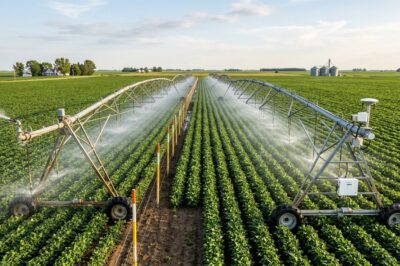
GPS vs Traditional Pivot Guidance for Soybeans: Accuracy, Maintenance, and Upgrade Economics
-
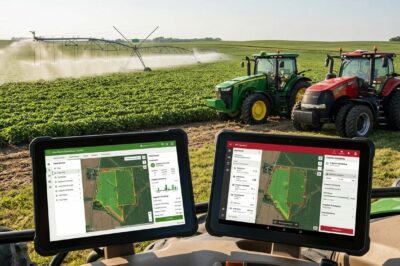
John Deere vs Case IH Irrigation Platform for Soybeans: Operations Center vs AFS Connect and What Each Actually Manages
-
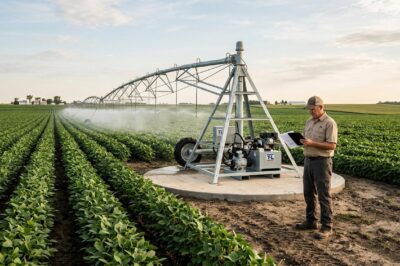
T-L Irrigation Pricing for Soybeans: What Drives System Cost and How to Compare Per-Acre Investment
-
Pivot Wheel Track Compaction and Soybean Yield: Impact, Measurement, and Management