
-
Drip Irrigation Installation Mistakes Dealers Still Make – And How to Avoid Them
Key Takeaways Article Summary Many drip irrigation system failures trace back to dealer installation errors made during the first 48 hours, not equipment defects. Professional installation mistakes cost soybean growers 15-30% of projected water savings and create yield variability that destroys ROI within the first season – but these problems are preventable when you know what to…
-
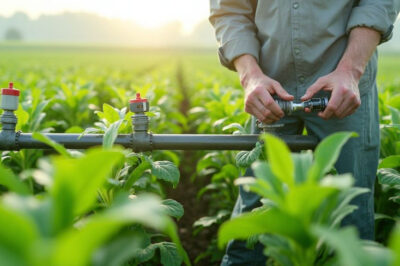
What Good Drip Irrigation Support Looks Like: Service Contracts, Response Times & Technician Quality
Key Takeaways Good irrigation dealer support means having a service partner who responds quickly during critical growth stages and keeps your equipment running efficiently. Quality support can prevent yield losses during R3-R6 when soybeans require consistent water delivery[1]. Why Drip Irrigation Support Differs from Center Pivot Service Drip irrigation systems require fundamentally different support expertise…
-
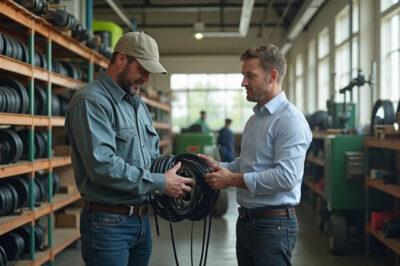
How to Choose a Drip Irrigation Dealer: Installation Quality, Warranty & Parts Availability
Key Takeaways Article Summary Choosing a drip irrigation dealer for soybeans requires evaluating design expertise (filtration sizing, hydraulic calculations, zone layout), row crop installation experience, and brand-specific parts access rather than just price. Qualified dealers provide field assessments, calculate pressure requirements for your soil type, train your staff on flushing protocols, and support warranty claims…
-
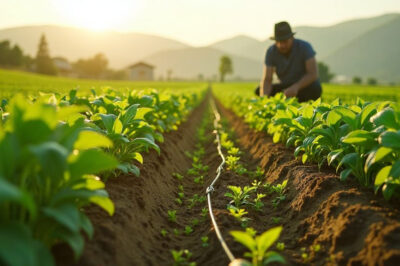
Drip Irrigation for Small-Scale Soybean Farms: Low-Cost, High-Efficiency Options
Key Takeaways Article Summary Small-scale eco-farming with drip irrigation transforms soybean production on 0.5-10 acre operations by cutting water use 30-50%, reducing labor requirements, and delivering 15-25% yield increases through precision moisture delivery during critical growth stages. Budget-conscious systems starting at $500 combine gravity-fed distribution, rainwater harvesting, and manual controls to achieve commercial-quality results without…
-
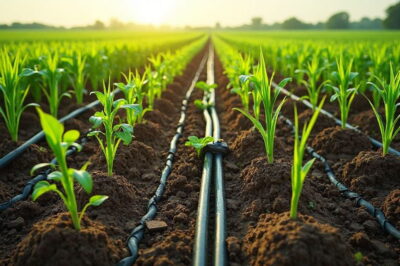
Balancing Drip Irrigation with Field Drainage to Avoid Waterlogging in Heavy Soils
Key Takeaways Article Summary Balancing eco-friendly drip irrigation with proper field drainage prevents waterlogging in heavy clay soils by coordinating precise water delivery at the root zone with subsurface drainage systems that remove excess moisture within 24-48 hours. This integrated approach protects soybean yields while achieving 30-50% water savings compared to conventional irrigation methods, making…
-
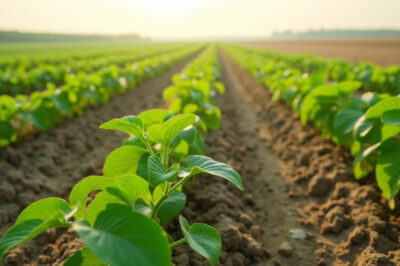
Drip Irrigation for Drought-Stressed Soybeans: Maintaining R1–R6 Water Supply
Key Takeaways Article Summary: Climate adaptation irrigation means redesigning drip systems to deliver water during soybean reproductive stages (R1-R6) under hotter, drier conditions while using less water per bushel produced. This approach prioritizes critical flowering and pod-fill periods, tolerates strategic deficits during less-sensitive stages, and integrates real-time soil monitoring to protect profits when drought strikes.…
-
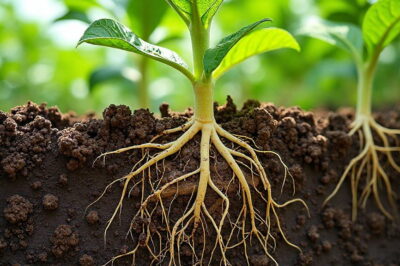
How Drip Irrigation Influences Soybean Canopy Development, Root Growth and Nodulation
Key Takeaways Article Summary Drip irrigation creates stable soil moisture conditions that fundamentally improve how soybean plants develop above and below ground. By delivering water directly to the root zone with minimal variation, drip systems support denser canopies, more extensive root networks, and healthier nitrogen-fixing nodule populations compared to traditional irrigation methods. Understanding the Connection…
-
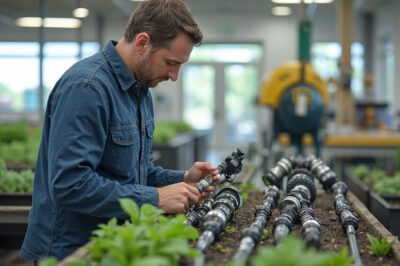
Drip Irrigation Technician Certification: Professional Training Programs for Soybean System Installation and Repair
Key Takeaways Article Summary Drip irrigation technician certification programs prepare specialists to install, maintain, and troubleshoot precision irrigation systems for commercial soybean operations. Training pathways range from manufacturer-sponsored workshops to industry certifications requiring hands-on mastery of emitter technology, filtration systems, water chemistry management, and subsurface installation techniques that maximize water efficiency while preventing system failures.…
-
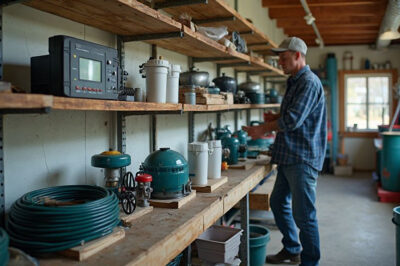
Seasonal Storage and Winterization of Drip Irrigation Lines
Key Takeaways Article Summary Proper winterization of drip irrigation lines prevents freeze damage and extends system lifespan through systematic draining, chemical treatment, component storage, and pre-season startup procedures tailored to Midwest freeze dates. Why Seasonal Maintenance Protects Your Irrigation Investment Drip irrigation systems represent a significant capital investment for soybean operations, with subsurface installations ranging…
-
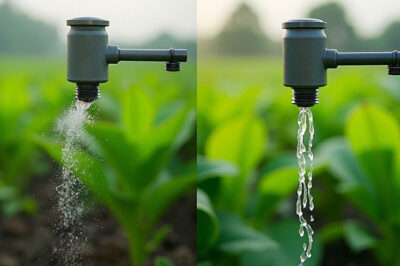
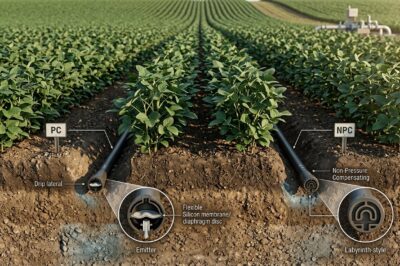
Identifying and Fixing Common Drip Irrigation Problems: Clogging, Algae, Rodents & Pressure Drops
Key Takeaways Drip Irrigation Interactive Diagnostic Tools Available in this Article Article Summary Drip irrigation troubleshooting starts with a systematic check of your water source, filters, system pressure, and field lines to identify whether you’re dealing with clogs, leaks, pressure problems, or equipment failures. Once you pinpoint the issue, targeted fixes—from flushing sediment and treating…
Follow Us
-
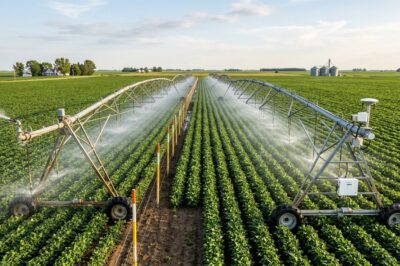
GPS vs Traditional Pivot Guidance for Soybeans: Accuracy, Maintenance, and Upgrade Economics
-
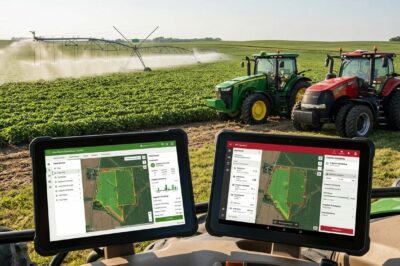
John Deere vs Case IH Irrigation Platform for Soybeans: Operations Center vs AFS Connect and What Each Actually Manages
-
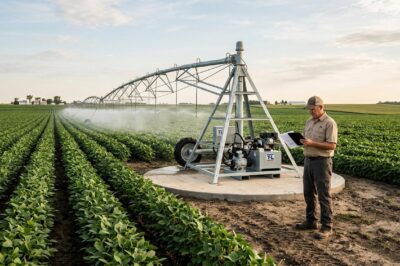
T-L Irrigation Pricing for Soybeans: What Drives System Cost and How to Compare Per-Acre Investment
-
Pivot Wheel Track Compaction and Soybean Yield: Impact, Measurement, and Management