
-
Smart Irrigation Support Services for Soybeans: How Ongoing Training Protects Your System Investment
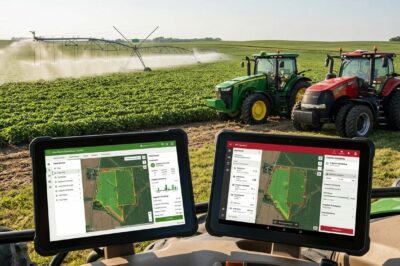
Key Takeaways: Smart irrigation support services include free decision-support apps, commercial service plans, and ongoing technical training — each protecting your system investment differently. University-developed tools like SmartIrrigation CropFit and CornSoyWater give soybean farmers free, research-backed scheduling guidance without relying on expensive contracts. Commercial service plans from Netafim, Lindsay (FieldWise), and Reinke (ReinCloud) offer remote…
-

Water Usage Analytics for Soybean Farms: Turning Irrigation Data into Higher Yields
Key Takeaways: Water productivity (WP) — the amount of grain you get per unit of water used — is the single most useful metric for measuring irrigation efficiency on soybean farms. Over 60% of total seasonal water demand hits during reproductive stages R1–R6, making that window the highest-priority target for data-driven irrigation decisions. Platforms like…
-
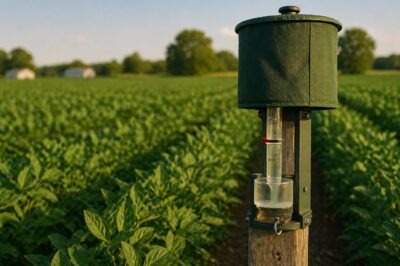
ET Gauge and Atmometer Maintenance for Soybean Irrigation Scheduling: A Seasonal Checklist
Key Takeaways Use only distilled water in your ET gauge — tap or well water will clog the ceramic cup within one season and ruin your readings. Replace the Gore-Tex paper wafer annually at the start of each season; a degraded wafer lets rainwater in and throws off every reading you take. Mount the atmometer…
-
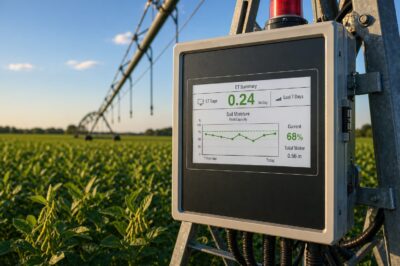
ET-Based Irrigation Controllers: How Evapotranspiration Data Drives Smarter Soybean Watering
Key Takeaways: ET-based irrigation controllers replace water based on actual crop evapotranspiration — not a fixed schedule — reducing over-irrigation and the disease pressure that comes with it. For commercial soybean operations, the crop coefficient (Kc) rises from roughly 0.50 at emergence to 1.15 at mid-season (R3–R5), meaning water demand nearly doubles as pods set…
-
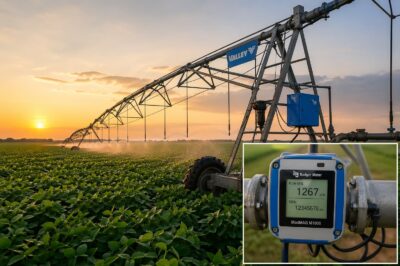
Flow Meters for Soybean Irrigation: How to Monitor and Reduce Water Waste
Key Takeaways A flow meter measures both real-time water flow rate and total volume applied — giving you the data to stop over-irrigating. Electromagnetic (mag) meters offer the highest accuracy (±0.5–1%) with no moving parts and minimal maintenance — making them the best long-term choice for most soybean operations. [1] Propeller meters are still the…
-
How Ground-Based LiDAR Improves Field Variability Mapping in Soybeans
Ground-based LiDAR for agriculture gives soybean farmers a precise, three-dimensional picture of their field’s structure — from the tiny elevation differences that cause wet spots and drought stress, to canopy height variations that signal where crops are falling behind. That data translates into smarter irrigation zones, better prescription maps, and irrigation decisions that respond to…
-
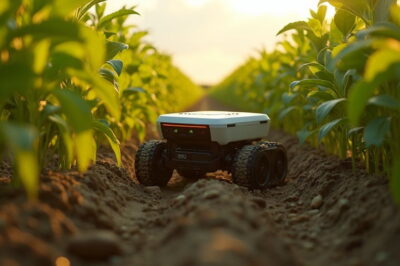
Field Robots in Soybean Farming: What Works Today and What Doesn’t
Agricultural field robots for farms are no longer just a future concept — several categories are working in commercial soybean fields right now, saving farmers real money on herbicides and labor. But many others are years away from working at the scale a Midwest grain farmer actually needs. This guide separates what you can deploy…
-
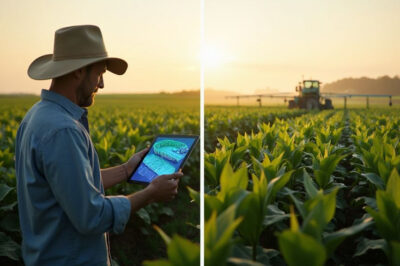
Emerging Precision Agriculture Technology Systems Shaping the Future of Soybean Farming
Key Takeaways Emerging precision agriculture technology systems are shifting soybean farming from reactive management to fully predictive operations. The technologies entering commercial availability right now — hyperspectral imaging, digital farm twins, AI-autonomous field robots, and edge-computing-driven irrigation — are not incremental upgrades to what you already use. They represent a new management layer that will…
-
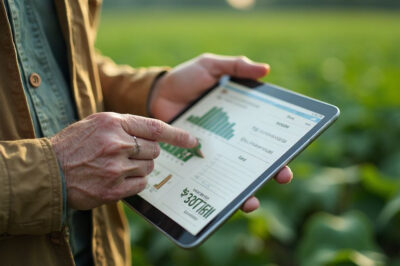
Where AI Yield Predictions Go Wrong in Real-World Soybean Fields
AI crop yield accuracy tools can be genuinely useful for soybean farmers — but the numbers vendors advertise rarely reflect what happens when those tools meet the soil variability, weather surprises, and management complexity of a real Midwest operation. This article explains where the accuracy gaps come from, which failure modes are most common for…
-
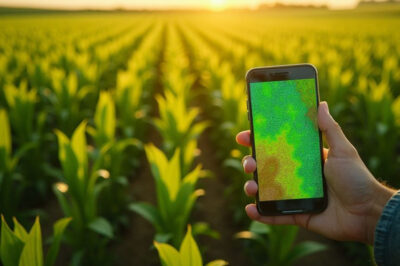
How Machine Learning Models Forecast Soybean Yield Variability — And What That Means for Your Operation
Article Summary: Machine learning crop yield prediction software uses algorithms trained on satellite, weather, soil, and historical field data to forecast soybean yield at field or subfield level throughout the growing season. The technology is proven at county scale and increasingly reliable at field scale, but accuracy depends heavily on the quality and volume of…
Follow Us
-
GPS vs Traditional Pivot Guidance for Soybeans: Accuracy, Maintenance, and Upgrade Economics
-
John Deere vs Case IH Irrigation Platform for Soybeans: Operations Center vs AFS Connect and What Each Actually Manages
-
T-L Irrigation Pricing for Soybeans: What Drives System Cost and How to Compare Per-Acre Investment
-
Pivot Wheel Track Compaction and Soybean Yield: Impact, Measurement, and Management