
-
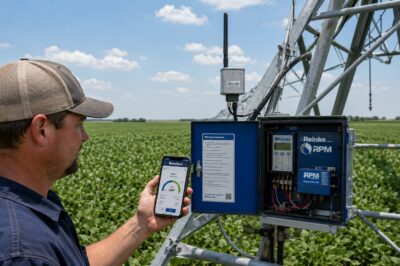
Reinke Telemetry Troubleshooting: Fixing Connectivity Issues in Rural Dead Zones
Key Takeaways Reinke telemetry troubleshooting in rural dead zones is a systematic process — not a guessing game. The RC3/ReinCloud system that most current Reinke pivots run has a predictable failure mode hierarchy, and most connectivity issues fall into one of four diagnostic categories. Working through them in order gets you from “pivot offline” to…
-
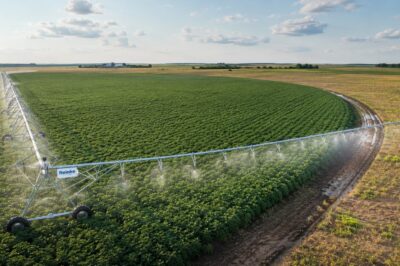
Corner Arm Systems for Reinke Center Pivots: How to Maximize Irrigated Acres on Irregular Soybean Fields
Key Takeaways Corner arm systems for Reinke center pivots solve a real and measurable problem: on a standard 160-acre square field, a circular center pivot leaves approximately 20–22% of the corners unirrigated. For a commercial soybean operation, those corner acres — often some of the most productive soil in the field — generate zero return…
-
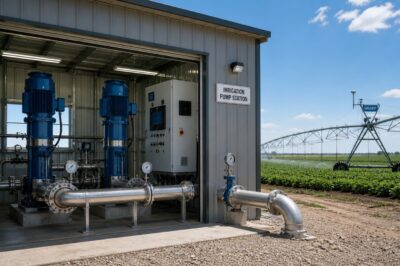
Commercial Irrigation Pump Station Sizing and Selection Guide for Soybean Operations
Key Takeaways An irrigation pump station for commercial soybean production is a long-term infrastructure investment that will either support or constrain your irrigation program for the next 20–30 years. Oversized, it wastes capital and operates inefficiently at partial load. Undersized, it can’t meet peak crop demand during R3–R5 — the growth stage where water stress…
-
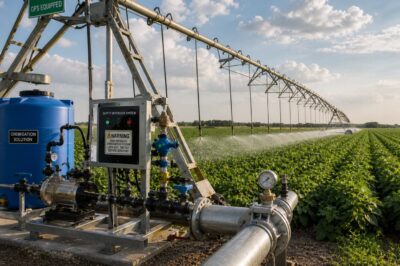
Chemigation Through Center Pivot Systems for Soybeans: Equipment, Calibration, and Compliance
Key Takeaways Chemigation through center pivot systems gives commercial soybean farmers a significant operational advantage: the ability to apply fungicides, insecticides, and plant protection products across large acreage precisely when crop protection decisions demand it — including during periods when wet field conditions prevent ground equipment from entering the field. For soybean operations managing disease…
-
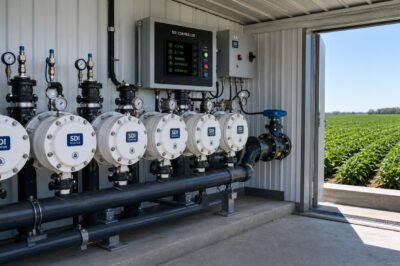
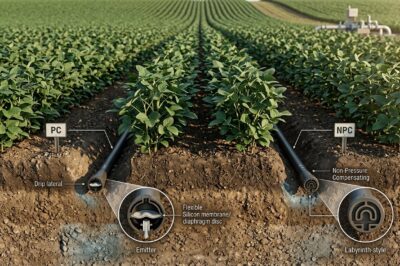
Smart Filtration Systems for Soybean Drip Irrigation: What to Buy and Why It Matters
Key Takeaways Smart filtration systems for soybean drip irrigation protect the most capital-intensive component of an SDI investment — the emitters — from the most common cause of their failure. Every drip emitter in a soybean SDI system has a flow path measured in thousandths of an inch. Any particle, organic fragment, or algae colony…
-
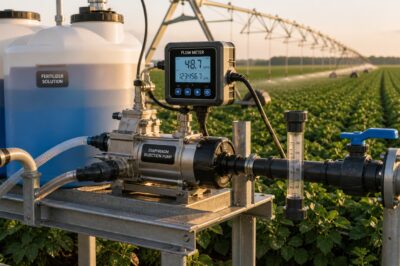
Nutrient Delivery Systems for Soybean Farmers: A Practical Buying Guide
Key Takeaways Choosing the right nutrient delivery system for soybean irrigation is a decision that affects input efficiency, application timing, and yield potential across every acre you manage. The wrong system — oversized for your operation, incompatible with your irrigation infrastructure, or too complex to calibrate accurately in-season — will cost you in wasted inputs…
-
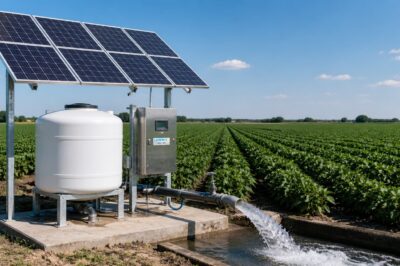
Solar-Powered Irrigation Pumps for Soybeans: Off-Grid Performance, Sizing, and Real Cost Breakdown
Key Takeaways Solar-powered irrigation pumps for soybeans solve a specific problem that grid-tied and diesel systems cannot: delivering reliable water to remote field locations where running power lines is cost-prohibitive and diesel fuel logistics are a seasonal burden. For the right operation and application, solar pumping eliminates ongoing energy costs entirely and provides decades of…
-
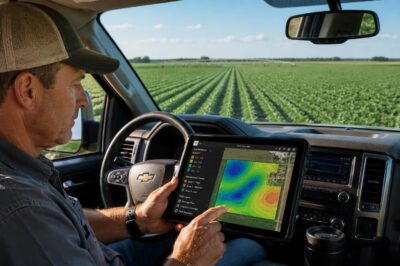
Field Water Mapping Software for Soybean Farms: Installation Guide and First-Season Setup Tips
Key Takeaways Field water mapping software for soybean farms takes the raw data your operation already generates — field boundaries, elevation surveys, soil maps, yield history, sensor readings — and turns it into a spatial picture of where water is moving, pooling, draining, or running short across your irrigated acres. Setting it up correctly in…
-
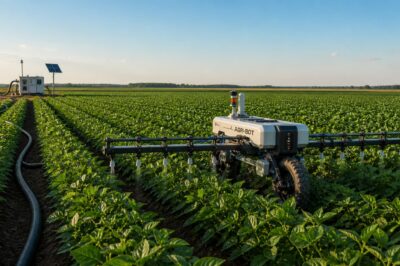
Autonomous Irrigation Robots for Soybeans: What Farmers Need to Know Before They Buy
Key Takeaways Autonomous irrigation robots for soybeans have crossed from demonstration plots into commercial fields. The technology is real, it’s working, and it’s solving specific problems that center pivots and traveling guns cannot — particularly on irregular-shaped fields, low-capacity wells, and operations where precise root-zone water delivery during R3–R5 is the priority. But robotic irrigation…
-

Infrared Aerial Imaging for Soybean Health Monitoring: Services, Costs and ROI
Key Takeaways Infrared aerial imaging uses two distinct sensor types — multispectral near-infrared and thermal infrared — which solve different problems and should not be used interchangeably. Thermal infrared detects water stress and Sudden Death Syndrome (SDS) by measuring canopy temperature changes before you can see any symptoms in the field. [1] Multispectral near-infrared imaging…
Follow Us
-
GPS vs Traditional Pivot Guidance for Soybeans: Accuracy, Maintenance, and Upgrade Economics
-
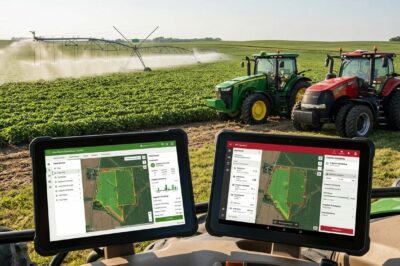
John Deere vs Case IH Irrigation Platform for Soybeans: Operations Center vs AFS Connect and What Each Actually Manages
-
T-L Irrigation Pricing for Soybeans: What Drives System Cost and How to Compare Per-Acre Investment
-
Pivot Wheel Track Compaction and Soybean Yield: Impact, Measurement, and Management