
-

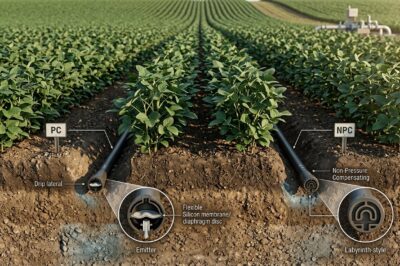
John Deere Water T-Systems Drip Tape for Corn and Soybean: Product Comparison and Field Performance Guide
Key Takeaways John Deere Water’s T-Tape drip tape was acquired by Rivulis Irrigation but the product design, emitter technology, and performance specifications remain identical — the same tape, different nameplate. T-Tape’s slit-outlet emitter design collapses flat at zero pressure, physically blocking soil and root intrusion between irrigation events — the single most important feature for…
-

Weather-Based Irrigation Triggering for Soybeans: How ET Controllers Reduce Over-Watering on Commercial Farms
Key Takeaways Weather-based irrigation triggering for soybeans works by calculating how much water your crop lost each day and only running irrigation when that deficit hits a threshold you set. Instead of a fixed timer that waters regardless of what happened yesterday, an ET-based controller keeps a running soil water balance and pulls the trigger…
-
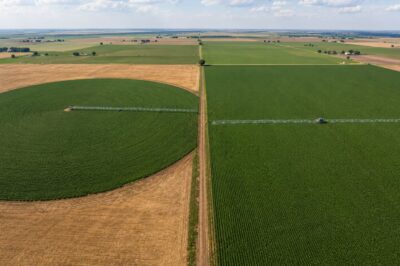
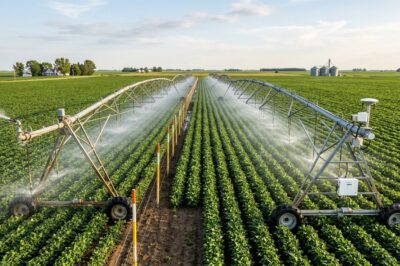
Linear Move vs Center Pivot for Soybeans: Coverage, Cost, Uniformity, and the Rectangular Field Decision
Key Takeaways Linear move vs center pivot for soybeans is ultimately a question about field geometry, labor infrastructure, and the financial value of corner acre production. The linear move wins on coverage and uniformity — no other overhead irrigation system covers more of a rectangular field or applies water more uniformly from lateral end to…
-
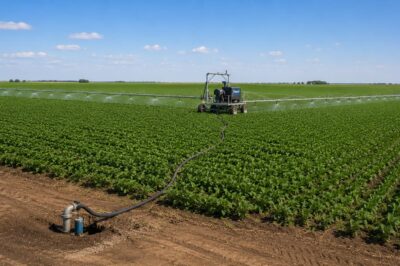
T-L Linear Move Irrigation for Soybeans: Hydrostatic Drive, Full Rectangular Coverage, and PMDI Integration
Key Takeaways T-L linear move irrigation for soybeans solves the geometric inefficiency that center pivots build into every irrigation system by design: the circle. On a square or rectangular soybean field, a pivot covers 78% of the acreage and leaves the corners as permanent dryland. A T-L linear move covers 95–98% of the same field,…
-
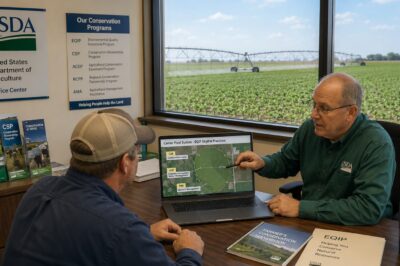
How to Apply for EQIP Cost-Share for Soybean Irrigation: Eligibility, Practice Codes, and Step-by-Step Process
Key Takeaways EQIP standard cost-share for irrigation practices is 75% of the NRCS-established payment rate for eligible practices — up to 90% for beginning farmers (farming 10 years or fewer), veterans, and socially disadvantaged producers. The 75% figure is the correct standard rate; lower figures sometimes cited reflect minimum payment schedule floors, not the standard…
-
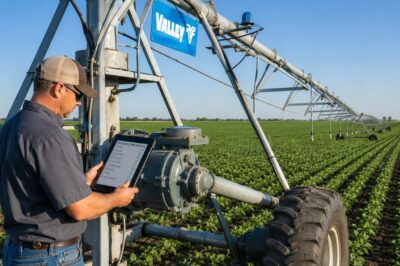
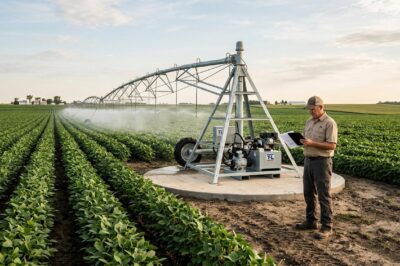
Pivot Maintenance Service Contracts for Soybean Farms: Tiers, Requirements, and Risk Analysis
Key Takeaways A single center pivot failure during R3–R5 peak soybean water demand — left unresolved for 48–72 hours waiting for a technician — can cost 5–15 bushels per acre in yield loss across the full irrigated circle, making service response time the most financially critical clause in any pivot maintenance contract. [1] Three contract…
-

Midwest Aquifer Depletion and SDI for Soybeans: How Low-Capacity Wells Are Changing the Irrigation Calculus
Key Takeaways The Ogallala-High Plains Aquifer underlies approximately 174,000 square miles across eight states — Kansas, Nebraska, Colorado, Oklahoma, Texas, New Mexico, South Dakota, and Wyoming — and has experienced significant saturated thickness declines in heavily irrigated areas over the past 60 years of intensive pumping. [1] Kansas Local Enhanced Management Areas (LEMAs) are the…
-
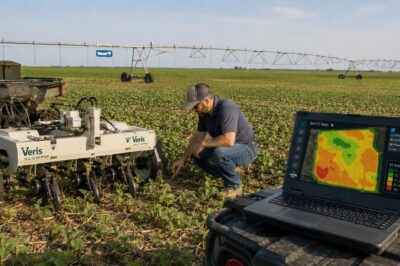
VRI Prescription Mapping for Soybean Fields: Data Layers, Zone Delineation, and Seasonal Updates
Key Takeaways VRI prescription mapping for soybean fields is the data layer that transforms VRI hardware from a capability into a result. A pivot equipped with Zone Control OPMC5 boxes and solenoid valves without a well-built prescription map applies arbitrary zone rates that may be no better — and potentially worse — than a carefully…
-
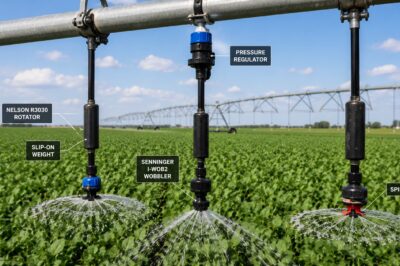
Center Pivot Drop Nozzle Selection for Soybeans: Rotators, Wobblers, Spinners, and Soil-Matched Packages
Key Takeaways Center pivot drop nozzle selection for soybeans is a decision that most growers make once at system installation and then don’t revisit — which is a mistake, because the nozzle package is the component that translates everything the pivot’s engineering achieves in structural uniformity and pressure management into actual water distribution at the…
-
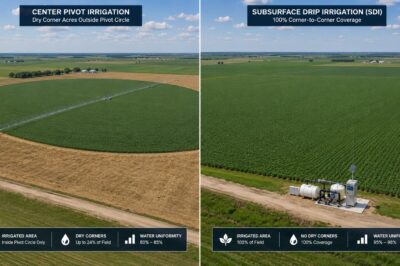
SDI vs Center Pivot for Soybeans: Full Economics, ROI, and Decision Guide for Commercial Growers
Key Takeaways SDI vs center pivot for soybean ROI is a decision that hinges less on which system is technically superior — SDI wins that comparison on water efficiency, application precision, and disease management by a clear margin — and more on which system’s financial structure fits your specific operation. Capital available, land ownership status,…
Follow Us
-
GPS vs Traditional Pivot Guidance for Soybeans: Accuracy, Maintenance, and Upgrade Economics
-
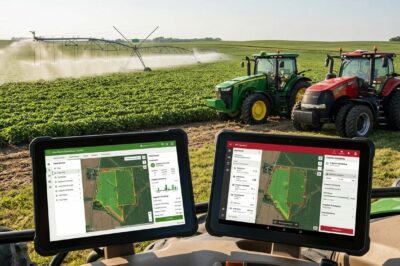
John Deere vs Case IH Irrigation Platform for Soybeans: Operations Center vs AFS Connect and What Each Actually Manages
-
T-L Irrigation Pricing for Soybeans: What Drives System Cost and How to Compare Per-Acre Investment
-
Pivot Wheel Track Compaction and Soybean Yield: Impact, Measurement, and Management