
-

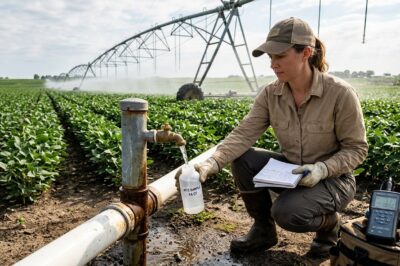
Irrometer Watermark Sensors: Low-Cost Soil Tension Monitoring for Soybean Irrigation Trigger Points
Key Takeaways Irrometer Watermark sensor soybean irrigation management is one of the most cost-effective entry points into data-driven irrigation scheduling for commercial soybean operations. At roughly $30–50 per sensor, Watermark sensors deliver actionable soil moisture data at a fraction of the cost of capacitance probe systems, and their resistance-based measurement principle produces readings that translate…
-
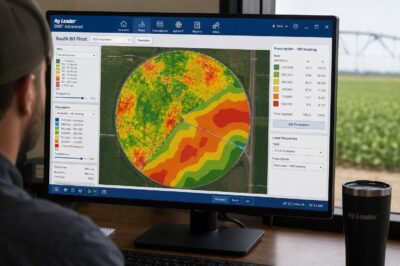
Ag Leader SMS Advanced: Using Yield Map Data to Drive Variable Rate Irrigation Decisions in Soybeans
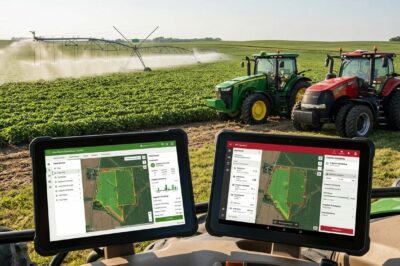
Key Takeaways Ag Leader SMS Advanced VRI for soybeans is the bridge between the spatial data a commercial soybean operation has already collected — yield maps, soil surveys, elevation models — and a center pivot irrigation system that can act on that data by varying application rates across the field. Most soybean operations running precision…
-

LoRa and Cellular Telemetry Options for Remote Pivot Monitoring: Choosing the Right Network for Your Farm
Key Takeaways LoRa cellular telemetry center pivot monitoring is not a choice between two competing technologies — it is a question of where each technology’s strengths align with the specific connectivity challenges of a commercial soybean operation. Cellular networks built for smartphone users were not designed around the density, geographic distribution, and power constraints of…
-

Irrigation Dealer vs. Direct-to-Farm Purchase: How to Evaluate Channel Options When Buying Commercial SDI Components
Key Takeaways Irrigation dealer vs. direct purchase for soybean SDI comes down to one question: what is the cost of getting it wrong? For commodity consumables with fixed specifications, getting it wrong means buying the wrong emitter spacing or wall thickness — a correctable mistake with a modest cost. For complex capital infrastructure like pump…
-

The Utility of ET Networks for Large-Scale Soybean Operations: ASCE Penman-Monteith Models in Practice
Key Takeaways The FAO-56 Penman-Monteith equation is the universal scientific standard for calculating reference evapotranspiration (ET₀) — the daily water loss benchmark from which all crop-specific irrigation requirements are derived, including soybeans at every growth stage. ET networks — regional arrays of automated weather stations — solve the equation continuously across agricultural landscapes, giving commercial…
-

Pump Station Automation Controllers for Large-Scale Soybean SDI: What to Specify and Why
Key Takeaways Pump station automation controllers for soybean SDI are the piece of infrastructure that makes precision irrigation work at scale. A Cropwise platform can calculate the perfect ET-based irrigation prescription for a 400-acre soybean field. A Netafim NavNet system can wirelessly command 40 zone valves to open in the correct sequence. But if the…
-

Cropwise Irrigation by Syngenta: How Decision-Support Platforms Help Soybean Farmers Schedule Irrigation Events
Key Takeaways Cropwise is Syngenta’s cloud-based digital farming platform — it does not manufacture irrigation hardware but uses satellite imagery, AI weather modeling, and integrated soil sensors to tell soybean growers when and where to irrigate. The platform uses NDWI (Normalized Difference Water Index) satellite data to detect early canopy water stress in soybean fields…
-

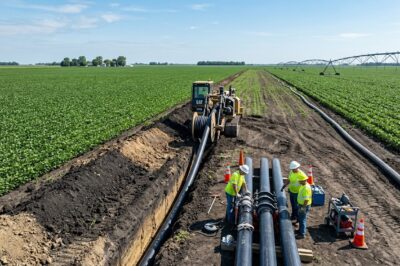
Subsurface Drip Irrigation Tape Depth and Spacing Guidelines for Commercial Soybean Row Crop Production
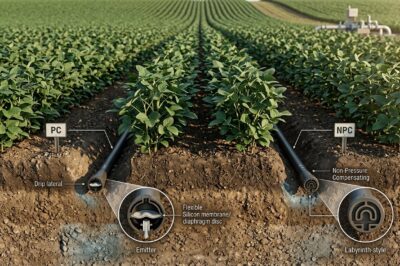
Key Takeaways Subsurface drip tape depth and spacing for soybeans is the foundational design decision that determines whether a buried SDI system delivers consistent yield improvement for 15–20 years or creates chronic management problems that erode its economic advantage within the first few seasons. Unlike every other component of a drip irrigation system, buried tape…
-

AgSense Field Commander: Remote Pivot Monitoring and Control for Midwest Soybean Operations
Key Takeaways AgSense Field Commander center pivot monitoring gives soybean growers remote visibility and control over their pivot fleet without replacing existing control panels. The hardware mounts at the end tower, connects to the existing panel’s control circuit, and communicates through the cellular network to the AgSense 365 cloud platform and mobile app. A grower…
-
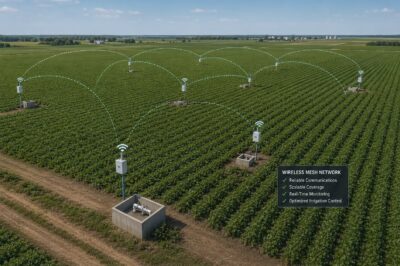
Netafim NavNet Wireless Valve Control: Remote Zone Management for Large-Scale Soybean SDI Systems
Key Takeaways Netafim NavNet wireless valve control for soybean SDI solves a specific infrastructure problem that limits how large a subsurface drip system can practically grow: the cost and complexity of running copper control wiring from a central pump station to every zone valve across a commercial field. On a 500-acre SDI block with 40…
Follow Us
-
GPS vs Traditional Pivot Guidance for Soybeans: Accuracy, Maintenance, and Upgrade Economics
-
John Deere vs Case IH Irrigation Platform for Soybeans: Operations Center vs AFS Connect and What Each Actually Manages
-
T-L Irrigation Pricing for Soybeans: What Drives System Cost and How to Compare Per-Acre Investment
-
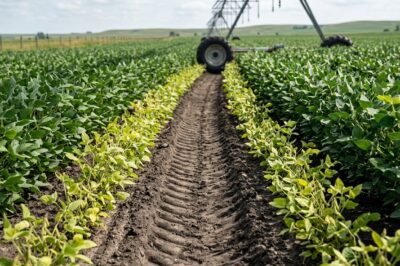
Pivot Wheel Track Compaction and Soybean Yield: Impact, Measurement, and Management