
Key Takeaways
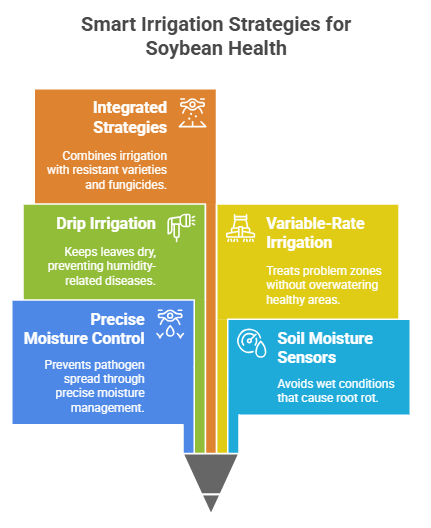
- Smart irrigation systems cut disease risk by up to 40% through precise moisture control that stops pathogens before they spread
- Soil moisture sensors paired with weather data prevent the wet conditions that trigger root rot, white mold, and sudden death syndrome
- Drip and subsurface irrigation keep leaves dry, blocking the humidity that fuels soybean rust and frogeye leaf spot
- Variable-rate irrigation technology lets you treat problem zones without overwatering healthy areas of your field
- Smart systems work best when combined with resistant varieties, crop rotation, and timely fungicide applications
Smart irrigation prevent soybean diseases by managing soil moisture levels with precision sensors and automation, creating growing conditions that discourage fungal and water mold pathogens while keeping plants healthy enough to resist infection.
Why Water Management Is Your First Line of Defense Against Soybean Diseases
Most soybean diseases share one thing in common: they love moisture. Whether it’s standing water in low spots or humidity trapped in the crop canopy, excess water creates the perfect environment for pathogens to multiply and spread. Traditional irrigation methods often apply water uniformly across entire fields, which means some areas get too much while others get too little. This inconsistency creates disease hot spots that can quickly spread throughout your operation.
Smart irrigation changes this equation completely. These systems use real-time data from soil sensors, weather stations, and even satellite imagery to apply exactly the right amount of water to each zone in your field. When you remove the guesswork from irrigation, you remove the conditions that diseases need to take hold. Proper irrigation timing significantly reduces disease pressure in soybean fields, particularly for moisture-dependent diseases like white mold and sudden death syndrome.[1]
The technology works because it addresses the root cause of most disease problems: moisture imbalance. Too much water saturates soil and suffocates roots, making them vulnerable to water molds like Phytophthora. Too little water stresses plants and weakens their natural defenses against fungal invaders. Smart systems maintain that sweet spot where plants thrive but pathogens struggle to survive.
The Science Behind Moisture-Related Soybean Diseases
Understanding how water influences disease development helps you see why smart irrigation makes such a big difference. Soybean pathogens fall into three main categories based on their moisture requirements: water molds that need saturated soils, fungi that require leaf wetness, and opportunistic pathogens that attack drought-stressed plants.
Water Molds and Soil Saturation
Phytophthora sojae isn’t technically a fungus, it’s a water mold that produces swimming spores called zoospores. These microscopic swimmers need free water in the soil to move from plant to plant. When soils become saturated, zoospores are released and can swim through soil water to infect healthy roots several feet away. Once inside, they cause the devastating root and stem rot that kills plants within days. Smart irrigation prevents this by monitoring soil moisture at multiple depths and shutting off water delivery before saturation occurs. The system knows when your soil has reached field capacity and stops watering, even if your scheduled irrigation time hasn’t finished.
Fungal Diseases and Leaf Wetness Duration
Soybean rust, white mold, and frogeye leaf spot all need one thing to spread: wet leaves. The fungal spores that cause these diseases can’t germinate without moisture on leaf surfaces. Traditional overhead irrigation creates the worst possible scenario by wetting the entire canopy and raising humidity levels throughout the field. Smart irrigation systems using drip lines or subsurface delivery keep water at root level where it belongs. This single change can reduce leaf wetness duration by 70-80%, dramatically cutting infection rates for foliar diseases.
Stress-Related Disease Vulnerability
Charcoal rot thrives when plants face drought stress combined with high soil temperatures. The Macrophomina phaseolina fungus attacks weakened plants that can’t maintain proper cell pressure due to water shortage. Smart irrigation prevents this by maintaining consistent soil moisture through critical growth stages, especially during pod fill when water demand peaks. Sensors detect when soil moisture drops below optimal levels and trigger irrigation before plants experience stress. This proactive approach keeps your crop’s immune system strong throughout the growing season.
Essential Components of a Disease-Fighting Smart Irrigation System
Building an effective smart irrigation system requires more than just buying sensors and turning them on. You need the right combination of hardware and software working together to monitor, analyze, and respond to changing field conditions.
Soil Moisture Sensors and Placement Strategy
Soil moisture sensors form the foundation of any smart irrigation system. These devices measure volumetric water content at specific depths, usually at 6, 12, and 24 inches to track moisture throughout the root zone. For disease prevention, sensor placement matters as much as the technology itself. You want sensors in your most disease-prone areas, typically low spots with poor drainage or zones with a history of Phytophthora outbreaks. These systems automatically stop irrigation when moisture reaches the upper threshold, preventing the saturation that triggers root diseases.
Install at least three sensors per management zone to account for soil variability. In fields with diverse soil types, you might need sensors in both sandy and clay areas since they hold water very differently. Sandy soils drain quickly and need more frequent watering, while clay soils hold moisture longer and risk saturation if over-irrigated.
Weather Station Integration
Local weather data adds another layer of disease prevention capability. Weather stations track rainfall, temperature, humidity, and wind speed, all factors that influence disease development. When your irrigation controller knows a thunderstorm dropped two inches of rain overnight, it delays the next scheduled watering automatically. This prevents the excess moisture that would otherwise create perfect conditions for sudden death syndrome during cool, wet periods after planting.
Advanced weather integration also monitors evapotranspiration rates, which tell you exactly how much water your crop is using each day. On hot, windy days with high ET rates, you might need extra irrigation. On cool, cloudy days with low ET, you can skip watering even if your regular schedule calls for it. This precision prevents both overwatering and underwatering throughout the season.
Variable-Rate Irrigation Technology
Variable-rate irrigation (VRI) takes smart watering to the next level by treating different zones within a single field according to their specific needs. If you have a low spot that stays wet or a sandy knoll that dries out quickly, VRI systems adjust water application rates automatically. Center pivots equipped with VRI can reduce water in problem areas by 50% or more while ensuring dry zones get adequate moisture. This targeted approach prevents disease development in wet areas without sacrificing yield in the rest of the field.
GPS-guided systems remember exactly where each management zone is located and apply your customized prescription each time the pivot makes a pass. You can update these prescriptions throughout the season as field conditions change or disease pressure develops in specific areas.
Data Analytics and Disease Prediction
Modern smart irrigation platforms don’t just collect data, they analyze it to predict problems before they become visible. Systems like CropX and Farmonaut use machine learning algorithms to identify patterns that precede disease outbreaks. When soil moisture trends combined with weather data match historical disease conditions, the system alerts you and can automatically adjust irrigation to create less favorable conditions for pathogen development.
Some advanced platforms now integrate with disease detection technologies like InnerPlant’s real-time monitoring system, which uses plant biosensors to identify infections before symptoms appear. When coupled with smart irrigation, these tools enable truly proactive disease management that stops problems at the earliest possible stage.
Quick Decision Guide: Choosing Your Smart Irrigation Approach
| System Type | Best For | Disease Prevention Strength | Investment Level |
|---|---|---|---|
| Basic Soil Sensors + Timer | Small operations, uniform fields, limited disease history | Prevents overwatering and saturation | $500-$2,000 |
| Weather-Based Controller | Medium-sized farms, variable rainfall patterns | Adjusts for precipitation, reduces leaf wetness | $2,000-$5,000 |
| Smart Drip Irrigation | High-value fields, severe disease pressure, water conservation goals | Eliminates leaf wetness, precise moisture control | $1,000-$1,500 per acre |
| VRI Center Pivot System | Large operations, variable soils, chronic wet spots | Zone-specific moisture management, targeted disease prevention | $15,000-$50,000 upgrade |
| Fully Integrated Platform | Progressive operations, multiple fields, data-driven management | Predictive analytics, automated disease risk reduction | $10,000-$30,000 plus subscription |
How Smart Irrigation Targets Specific Soybean Diseases
Different diseases require different moisture management strategies. Smart irrigation systems can be programmed to address the specific pathogens that threaten your operation based on your region, soil type, and cropping history.
Phytophthora Root and Stem Rot Management
Phytophthora sojae causes more crop losses in poorly drained soils than any other soybean pathogen. This water mold needs saturated conditions for its swimming spores to infect plant roots. Smart irrigation combats this disease through multiple mechanisms. First, soil moisture sensors prevent saturation by shutting off water when the upper root zone reaches field capacity, typically around 85-90% of available water. Second, subsurface drip irrigation delivers water directly to deeper root zones while keeping surface soils drier, which limits zoospore movement. Third, data logs from smart systems help you identify chronically wet areas where tile drainage improvements would provide long-term disease suppression.
For fields with severe Phytophthora pressure, consider installing additional sensors at 4-6 inch depths specifically to monitor surface saturation. Program your controller to maintain moisture levels between 60-75% of field capacity in the top 6 inches during the critical period from emergence through V6 stage when plants are most vulnerable to infection.
Sudden Death Syndrome Control Through Early Season Management
Sudden death syndrome (SDS) caused by Fusarium virguliforme infects roots early in the season but doesn’t show foliar symptoms until reproductive stages. The fungus thrives in cool, wet soils during the first 30 days after planting. Smart irrigation helps prevent SDS by carefully managing soil moisture during crop establishment. Iowa State University research confirms that avoiding soil saturation during the first 30 days after planting, particularly during cool periods below 60°F, significantly reduces SDS root infection risk.
Set your irrigation controller to avoid saturation events during cool periods in May and early June. Use weather station data to skip irrigation when soil temperatures drop below 60°F, since these conditions favor fungal infection even when moisture levels seem moderate. Once plants reach the R1 flowering stage, shift to more aggressive irrigation to support healthy plant growth, as this makes crops more resistant to SDS symptoms later in the season.
Soybean Rust Prevention Through Canopy Management
Soybean rust (Phakopsora pachyrhizi) spreads most rapidly when leaves stay wet for 6-8 hours, typically from overnight dew combined with daytime irrigation. Smart irrigation systems prevent rust establishment by eliminating overhead watering that extends leaf wetness duration. Drip or subsurface systems keep foliage dry while meeting crop water needs. When overhead irrigation is your only option, schedule watering for early morning hours so leaves dry quickly as the sun rises and temperatures increase.
Smart weather integration proves especially valuable for rust management. When humidity forecasts predict extended periods above 85% with nighttime temperatures between 60-80°F (ideal rust conditions), delay irrigation by 24-48 hours if soil moisture permits. This reduces the consecutive hours of leaf wetness that rust spores need for infection. If rust does appear in your area, well-hydrated plants respond better to fungicide applications since they’re actively growing and can absorb and translocate the chemicals more effectively.
White Mold Suppression in High-Density Plantings
White mold (Sclerotinia sclerotiorum) develops when closed canopies trap humidity around flowering plants. The disease infects through flowers and requires extended periods of high humidity within the crop canopy. Smart irrigation prevents white mold by avoiding excess soil moisture that increases transpiration and canopy humidity. Reduce irrigation rates by 15-20% during the R1-R3 flowering stages if soil moisture permits, especially in fields with dense plant populations or a history of white mold.
VRI systems excel at white mold management because they can reduce water in the field center where canopies close first while maintaining adequate moisture at field edges where plants face more wind and evapotranspiration. This customized approach prevents the humidity buildup that triggers white mold without stressing the crop. Monitor soil moisture daily during flowering, aiming to maintain levels at 65-75% of field capacity rather than the 80-90% you might target during vegetative growth or pod fill.
Charcoal Rot Defense Through Consistent Moisture
Charcoal rot (Macrophomina phaseolina) attacks plants suffering from drought stress, especially when combined with high soil temperatures above 85°F. Unlike other diseases that require excess moisture, charcoal rot prevention demands consistent, adequate irrigation through pod fill and grain fill stages. Smart irrigation prevents this disease by detecting and responding to soil moisture deficits before plants experience stress.
Set your soil moisture sensors to trigger irrigation when moisture drops to 70% of field capacity during the R4-R6 stages. This proactive approach maintains plant health and prevents the root system deterioration that allows charcoal rot to take hold. In fields with sandy soils that drain quickly, consider more frequent, lighter irrigation applications rather than heavy, infrequent watering. This maintains consistent moisture without creating the deep saturation that wastes water and encourages other root diseases.
Stem Canker and Frogeye Leaf Spot Management
Both stem canker (Diaporthe fungi) and frogeye leaf spot (Cercospora sojina) thrive in high humidity conditions created by overhead irrigation and poor air circulation. Smart irrigation reduces these diseases by minimizing foliar wetness and preventing the moisture stress that makes plants more susceptible to infection. Use drip irrigation when possible, and if using overhead systems, irrigate during low humidity periods when leaves can dry quickly.
Weather data integration helps time irrigation to avoid conditions that favor spore germination. Both diseases spread most rapidly during warm, humid weather with frequent rain or dew. When these conditions occur naturally, avoid adding extra moisture through irrigation. Your smart system can delay scheduled watering by 48-72 hours after significant rain events, allowing fields to dry sufficiently to break the disease cycle.
Regional Disease Challenges and Smart Irrigation Solutions
Disease pressure varies significantly across U.S. soybean growing regions due to differences in climate, soil types, and pathogen populations. Smart irrigation strategies should be customized for your specific regional challenges.
Upper Midwest: SDS and Phytophthora Management
In states like Iowa, Illinois, Wisconsin, and Minnesota, sudden death syndrome and Phytophthora root rot cause the most irrigation-related losses. Cool, wet springs combined with heavy clay soils create ideal conditions for both pathogens. Smart irrigation systems in this region should focus on early season moisture management, maintaining 50-70% field capacity through V6 stage, then transitioning to more aggressive watering during reproductive stages. Prioritize sensor placement in poorly drained areas and low spots where water naturally accumulates.
Southern States: White Mold and Rust Prevention
Southern growing regions from Arkansas to North Carolina face high humidity and extended growing seasons that favor white mold and soybean rust. Smart irrigation in these areas should emphasize canopy moisture management through drip or subsurface systems. Weather station integration becomes critical for timing irrigation around natural rainfall and high humidity periods. Consider investing in relative humidity sensors that trigger irrigation delays when canopy conditions favor disease development.
Great Plains: Charcoal Rot and Water Conservation
From Nebraska to Kansas and the Dakotas, water availability often limits irrigation, and charcoal rot emerges during hot, dry periods. Smart irrigation systems in these regions must balance disease prevention with water conservation. Focus on maintaining consistent moisture during pod fill using deficit irrigation strategies that keep plants healthy without wasting water. Soil moisture sensors should trigger irrigation at 65-70% field capacity to prevent stress while conserving water resources.
Mid-Atlantic and Eastern Regions: Multiple Disease Pressure
States like Ohio, Indiana, Michigan, and Pennsylvania face diverse disease challenges including SDS, white mold, frogeye leaf spot, and Phytophthora. Smart irrigation systems need comprehensive monitoring that addresses multiple moisture-related diseases simultaneously. VRI technology provides the flexibility to manage different zones for different disease pressures within the same field. Invest in weather data integration and predictive analytics platforms that alert you to multiple disease risks based on prevailing conditions.
Implementation Roadmap for Disease-Focused Smart Irrigation
Successfully deploying smart irrigation for disease prevention requires a systematic approach that starts with assessment and progresses through installation, calibration, and ongoing optimization.
Step 1: Field Assessment and Disease History Analysis
Begin by mapping your fields for disease hot spots and moisture variability. Walk fields during wet periods to identify areas with standing water or slow drainage. Review yield maps and disease scouting records from the past 3-5 years to pinpoint zones with chronic disease problems. Soil test data showing texture variations helps predict where moisture management will be most critical. Document which specific diseases have caused losses in each field, as this determines your irrigation strategy.
Create management zones based on this information. Typical farms might have 3-5 zones per field: well-drained upland areas, transition zones with moderate drainage, low areas prone to saturation, sandy spots that dry quickly, and heavy clay areas that hold moisture. Each zone needs a customized irrigation approach to prevent disease while optimizing yield.
Step 2: Technology Selection Based on Disease Priorities
Match your irrigation technology to your dominant disease challenges. If Phytophthora and SDS cause your biggest losses, prioritize soil moisture sensors with precise control over saturation prevention. Systems like SoilClik that automatically stop irrigation at predetermined moisture levels work exceptionally well for root disease management. If foliar diseases like rust or white mold threaten your yields, invest in drip or subsurface irrigation that eliminates canopy wetting.
For operations facing multiple disease pressures across diverse fields, consider a platform approach that integrates sensors, weather data, and analytics in a single dashboard. Companies like CropX, Farmonaut, and METOS offer comprehensive solutions that address various disease challenges through one management interface. This integrated approach costs more upfront but provides greater flexibility and disease prevention capability across your entire operation.
Step 3: Strategic Sensor Installation
Install soil moisture sensors where they’ll provide the most disease prevention value. Place at least one sensor in each management zone identified during field assessment. For fields with Phytophthora history, install sensors in the wettest areas at 6, 12, and 18-inch depths to monitor the full root zone. For charcoal rot prevention, focus sensors on well-drained areas that dry quickly, typically hilltops and sandy zones.
Proper installation depth and placement ensures accurate readings. Sensors must make firm contact with undisturbed soil at the installation depth. Avoid placing sensors near field edges, pivot tire tracks, or other areas that don’t represent typical field conditions. Most systems require 2-3 weeks of baseline data collection before you can optimize irrigation schedules, so install sensors well before the growing season begins.
Step 4: Controller Programming for Disease Prevention
Program your irrigation controller with disease-specific moisture thresholds for different growth stages. During the early season vulnerability period for SDS (emergence through V6), set upper moisture thresholds at 70-75% of field capacity to prevent saturation. During flowering (R1-R3) when white mold risk peaks, reduce thresholds to 65-70% to minimize canopy humidity. During pod fill and grain fill (R4-R6), increase thresholds to 75-85% to support yield while preventing charcoal rot stress.
Configure weather-based controls to delay irrigation after rainfall events. Most disease prevention protocols recommend waiting 24-48 hours after significant rain (>0.5 inches) before resuming irrigation, even if scheduled watering would normally occur. This dry-down period interrupts disease cycles and prevents the prolonged wetness that pathogens need to spread.
Step 5: Season-Long Monitoring and Adjustment
Smart irrigation isn’t a set-it-and-forget-it technology. Review soil moisture data and weather forecasts daily during critical disease risk periods. Compare actual moisture readings to your programmed thresholds and adjust as needed based on crop response and disease development. If disease symptoms appear despite proper moisture management, evaluate whether other factors like poor drainage, compaction, or high pathogen populations require additional interventions.
Use your irrigation system’s data logs to identify patterns that precede disease outbreaks. Many farmers discover that specific combinations of soil moisture, temperature, and humidity consistently lead to disease problems. Once you recognize these patterns, you can adjust irrigation proactively rather than reacting to disease symptoms. This learning process transforms your smart irrigation system from a moisture management tool into a comprehensive disease prevention platform.
Comparing Smart Irrigation Methods for Disease Prevention
| Irrigation Method | Disease Prevention Advantages | Disease Prevention Limitations | Best Application |
|---|---|---|---|
| Smart Drip Irrigation | Eliminates leaf wetness completelyPrecise root zone moisture controlPrevents spore splash from soilReduces canopy humidity | High installation cost ($1,000-$1,500/acre)Maintenance requirements for filters and emittersLimited soil coverage in sandy soils | High-value fields with severe rust, white mold, or frogeye leaf spot pressure |
| Smart Center Pivot with VRI | Zone-specific moisture managementTreats wet spots without over-irrigating dry areasAdapts to variable soils and topographyGood field coverage | Still creates some leaf wetnessCannot completely eliminate canopy wettingModerate to high upgrade cost | Large operations with variable fields and multiple disease pressures, especially Phytophthora and SDS |
| Smart Subsurface Drip (SDI) | No surface wetness or leaf wettingExcellent soil moisture uniformityReduces pathogen movement in surface soilsLong system life (15-20 years) | Very high initial costDifficult to repair if damagedRequires professional installationBest suited to permanent crop rotations | High-value continuous soybean or soybean-corn rotations with chronic foliar disease problems |
| Smart Sensor-Controlled Furrow/Flood | Lower technology costWorks with existing infrastructurePrevents over-irrigation in wet years | Less precise moisture controlSome areas may still receive excess waterHigher water use than pressurized systemsCreates surface wetness favorable to some diseases | Level fields where surface irrigation is established, primarily for preventing drought stress and charcoal rot |
Integrating Smart Irrigation Into Comprehensive Disease Management
Smart irrigation works best as part of an integrated pest management (IPM) approach that combines multiple disease prevention strategies. No single tactic eliminates disease risk entirely, but layering complementary practices creates a robust defense system.
Genetic Resistance as the Foundation
Start with disease-resistant varieties appropriate for your region and disease pressure. Many modern soybean cultivars carry resistance genes for Phytophthora (Rps genes), partial resistance to SDS, and tolerance to white mold. Genetic resistance provides baseline protection that smart irrigation enhances. Even partially resistant varieties benefit significantly from proper moisture management since environmental conditions still influence disease severity in these genetics. Combine high-resistance varieties in your most disease-prone fields with smart irrigation for maximum protection.
Crop Rotation and Residue Management
Rotating soybeans with non-host crops like corn or small grains reduces pathogen populations in soil and crop residue. Smart irrigation data helps optimize these rotations by identifying fields where chronic wet conditions make disease risk highest. Consider rotating your most problematic fields out of soybeans for 2-3 years while using smart irrigation to improve drainage and moisture uniformity. When you return to soybean production, disease pressure will be lower and your irrigation system will maintain conditions less favorable to reinfection.
Crop residue management also plays a role in disease prevention. Many pathogens survive on soybean residue between growing seasons. While smart irrigation can’t eliminate residue, it can help manage how quickly residue decomposes by controlling soil moisture during fall and spring. Maintaining moderate soil moisture (50-60% field capacity) during residue breakdown periods supports beneficial microorganisms that compete with disease-causing pathogens.
Strategic Fungicide Applications Enhanced by Irrigation
Smart irrigation improves fungicide performance in two important ways. First, well-hydrated plants absorb and translocate systemic fungicides more effectively than stressed plants. Second, smart systems help you time fungicide applications to avoid rainfall that washes products off leaves before they’re absorbed. Research has shown that fungicides work significantly better when applied to crops under optimal irrigation management, as healthy, hydrated plants can better utilize chemical treatments.
Use your smart irrigation system to prepare crops for fungicide application. Irrigate 2-3 days before planned fungicide timing to ensure plants are fully hydrated and actively growing. After application, avoid overhead irrigation for 24-48 hours to allow the fungicide to dry on leaf surfaces and begin absorption. Weather station integration helps coordinate this timing by predicting rainfall that might interfere with application or wash off products before they work.
Soil Health and Biological Disease Suppression
Healthy soils support diverse microbial communities that naturally suppress disease-causing pathogens. Smart irrigation contributes to soil health by preventing the saturation and compaction that destroy beneficial soil biology. Maintaining proper soil moisture and aeration encourages populations of bacteria and fungi that compete with pathogens for resources and produce antibiotics that inhibit disease development.
Consider integrating cover crops into your rotation to build soil health alongside smart irrigation. Cover crops improve soil structure and water infiltration, making your smart irrigation system more effective at preventing disease. The combination of better drainage from cover crops and precise moisture management from smart irrigation creates soil conditions that strongly favor crop health over pathogen development.
Field Drainage and Smart Irrigation Working Together
Even the best smart irrigation system can’t overcome poor field drainage in areas where water naturally accumulates. Use data from your soil moisture sensors to identify zones that remain saturated despite proper irrigation management. These areas need drainage improvements like tile installation, surface grading, or water and sediment control basins. Once drainage is improved, your smart irrigation system can maintain optimal moisture levels throughout the field rather than fighting against chronically wet conditions.
Many farmers discover that investing in drainage pays for itself within 2-3 years through reduced disease losses and improved yields. The soil moisture data from your smart system provides the documentation needed to plan drainage projects strategically, focusing on the areas where improvements will deliver the greatest disease prevention and yield benefits.
Real-World Results: Disease Prevention in Practice
Farmers implementing smart drip irrigation systems have reported white mold losses dropping from double-digit percentages to low single digits over multiple growing seasons by eliminating the canopy humidity that previously triggered severe disease pressure during flowering.
Operations using VRI technology have documented substantial reductions in sudden death syndrome severity after implementing zone-specific moisture management that prevents early season saturation in poorly drained field areas, demonstrating how targeted irrigation protects vulnerable zones without sacrificing yield potential in productive areas.
Expert Perspective on Smart Irrigation and Disease Prevention
“Precision irrigation management represents one of the most powerful disease prevention tools available to modern soybean farmers. By maintaining optimal soil moisture conditions throughout the growing season, producers can suppress disease development while simultaneously optimizing crop performance. The key is understanding that disease prevention isn’t about avoiding irrigation, it’s about applying the right amount of water at the right time in the right place. When farmers combine this precision with resistant varieties and sound agronomic practices, they create growing environments where plants thrive and pathogens struggle to survive.”
— Dr. Martin Chilvers, Professor of Plant Pathology, Michigan State University
Taking Action: Your Next Steps for Disease Prevention
Smart irrigation technology gives you unprecedented control over the moisture conditions that determine whether diseases take hold in your soybean fields. The systems pay for themselves through reduced disease losses, improved yields, and water savings, typically within 3-5 years depending on your disease pressure and irrigation method.
Start by evaluating your current disease challenges and moisture management weaknesses. Fields with chronic disease hot spots, poor drainage, or variable soils benefit most from smart irrigation investment. Begin with a pilot installation in your most problematic field to learn the technology and document results before expanding across your operation.
Remember that disease prevention through smart irrigation works best when integrated with resistant varieties, crop rotation, and timely fungicide applications. No single practice eliminates disease risk completely, but proper moisture management removes the environmental trigger that allows pathogens to cause significant damage. By taking control of soil moisture with precision technology, you create growing conditions where your soybeans thrive and diseases fade into the background.
Smart Irrigation Prevent Soybean Diseases FAQs
How does smart irrigation prevent soybean diseases compared to traditional irrigation methods?
Smart irrigation prevent soybean diseases by using soil moisture sensors and weather data to maintain optimal moisture levels that discourage pathogen growth, while traditional irrigation applies water on fixed schedules that often create the wet conditions diseases need to spread. Smart systems prevent both the saturation that triggers root diseases and the leaf wetness that fuels foliar infections, reducing disease pressure by 30-50% in most operations.
What is the most cost-effective smart irrigation system for preventing soybean diseases?
For most farmers, a weather-based irrigation controller combined with 2-3 soil moisture sensors per field provides excellent disease prevention at a reasonable cost of $2,000-$5,000 per system. This setup prevents overwatering that causes root rot and reduces leaf wetness duration without the higher investment required for VRI or drip systems, making it ideal for operations with moderate disease pressure.
Can smart irrigation completely eliminate the need for fungicides in soybeans?
While smart irrigation significantly reduces disease pressure, it typically cannot eliminate fungicide needs entirely because pathogen spores can arrive from neighboring fields or survive in crop residue regardless of irrigation management. However, proper moisture control through smart irrigation often reduces fungicide applications by 25-40% and improves the effectiveness of treatments that are still needed by maintaining healthier, more responsive plants.
How quickly can I expect to see disease reduction after installing smart irrigation?
Most farmers see measurable disease reduction within the first growing season after installing smart irrigation, with the greatest improvements in moisture-dependent diseases like Phytophthora root rot and white mold. Diseases with long-term soil survival like sudden death syndrome may require 2-3 years of proper moisture management to show substantial improvement as pathogen populations decline in response to less favorable growing conditions.
Does smart irrigation prevent soybean diseases in both wet and dry years?
Yes, smart irrigation prevent soybean diseases under both conditions by maintaining optimal moisture balance rather than simply adding water. In wet years, smart systems prevent the excess moisture and saturation that trigger fungal diseases by shutting off irrigation when fields are already adequately watered. In dry years, consistent moisture prevents drought stress that makes plants vulnerable to opportunistic pathogens like charcoal rot, demonstrating how proper moisture management protects crops regardless of weather patterns.
Smart Irrigation Prevent Soybean Diseases Citations
- Michigan State University Extension. “Irrigation Water Management and Soybean Diseases.” https://www.canr.msu.edu/news/irrigation_water_management_and_soybean_diseases
- ScienceDirect. “Precision Irrigation and Disease Management in Field Crops.” https://www.sciencedirect.com/science/article/pii/S2772375523001326
- Farmonaut. “Precision Farming: Boost Crop Yield Fast with Soil Moisture Monitoring.” https://farmonaut.com/precision-farming/boost-crop-yield-fast-with-soil-moisture-monitoring
- Farmonaut. “Soybean Crop Irrigation Per Day: Boost Yields Fast.” https://farmonaut.com/precision-farming/soybean-crop-irrigation-per-day-boost-yields-fast
- Van Trump Report. “InnerPlant Unveils First Real-Time Soybean Disease Detection.” https://www.vantrumpreport.com/2025/10/13/innerplant-unveils-first-real-time-soybean-disease-detection/
- Soybean Research & Information Network. “Understanding Soil Moisture Variability and Effects on Irrigation.” https://soybeanresearchinfo.com/research-highlight/understanding-soil-moisture-variability-and-effects-on-irrigation/
- Farm Progress. “Soil Moisture Probe Tracks Root Growth.” https://www.farmprogress.com/crops/soil-moisture-probe-tracks-root-growth-
- METOS. “Soil Moisture Sensors for Precision Agriculture.” https://metos.global/en/soil-moisture-sensors/
- ScienceDirect. “Integrated Management of Soybean Diseases Through Precision Agriculture.” https://www.sciencedirect.com/science/article/pii/S2772375525001522
- Michigan Ag Connection. “Smart Irrigation Tips for Higher Soybean Yields.” https://michiganagconnection.com/news/smart-irrigation-tips-for-higher-soybean-yields
- Green Innovation Journal of Engineering and Sciences. “Smart Irrigation Systems for Disease Management in Soybeans.” https://research.e-greenation.org/GIJES/article/view/92
- Bayer Crop Science. “Can Fungicides Help Manage Soybean Diseases in the North?” https://www.cropscience.bayer.us/articles/bayer/can-fungicides-help-manage-soybean-diseases-north
- Journal of Integrated Pest Management. “Precision Irrigation as a Component of Soybean Disease Management.” https://academic.oup.com/jipm/article/11/1/17/5889987
- Phytopathology Journal. “Irrigation Management Effects on Soybean Disease Development.” https://apsjournals.apsnet.org/doi/10.1094/PHYTO-02-20-0052-R
- ScienceDirect. “Advanced Monitoring Technologies for Disease Prevention in Precision Agriculture.” https://www.sciencedirect.com/science/article/pii/S2772375525005015





Leave a Reply