
Key Takeaways
Rhizoctonia root rot is caused by the fungus Rhizoctonia solani and primarily affects soybean roots and stems.
Symptoms include reddish-brown lesions on roots and stems, stunted growth, and yellowing leaves.
Environmental factors like wet conditions and poor drainage increase the risk of disease development.
Effective control strategies include crop rotation, resistant varieties, proper irrigation, and fungicide applications.
Monitoring and early detection are crucial for managing and reducing the impact of Rhizoctonia root rot on soybean yields.
- Smart irrigation can play a part when used for targeted irrigation scheduling alongside other control factors
Soybean Rhizoctonia Root Rot: Smart Irrigation Management and Control
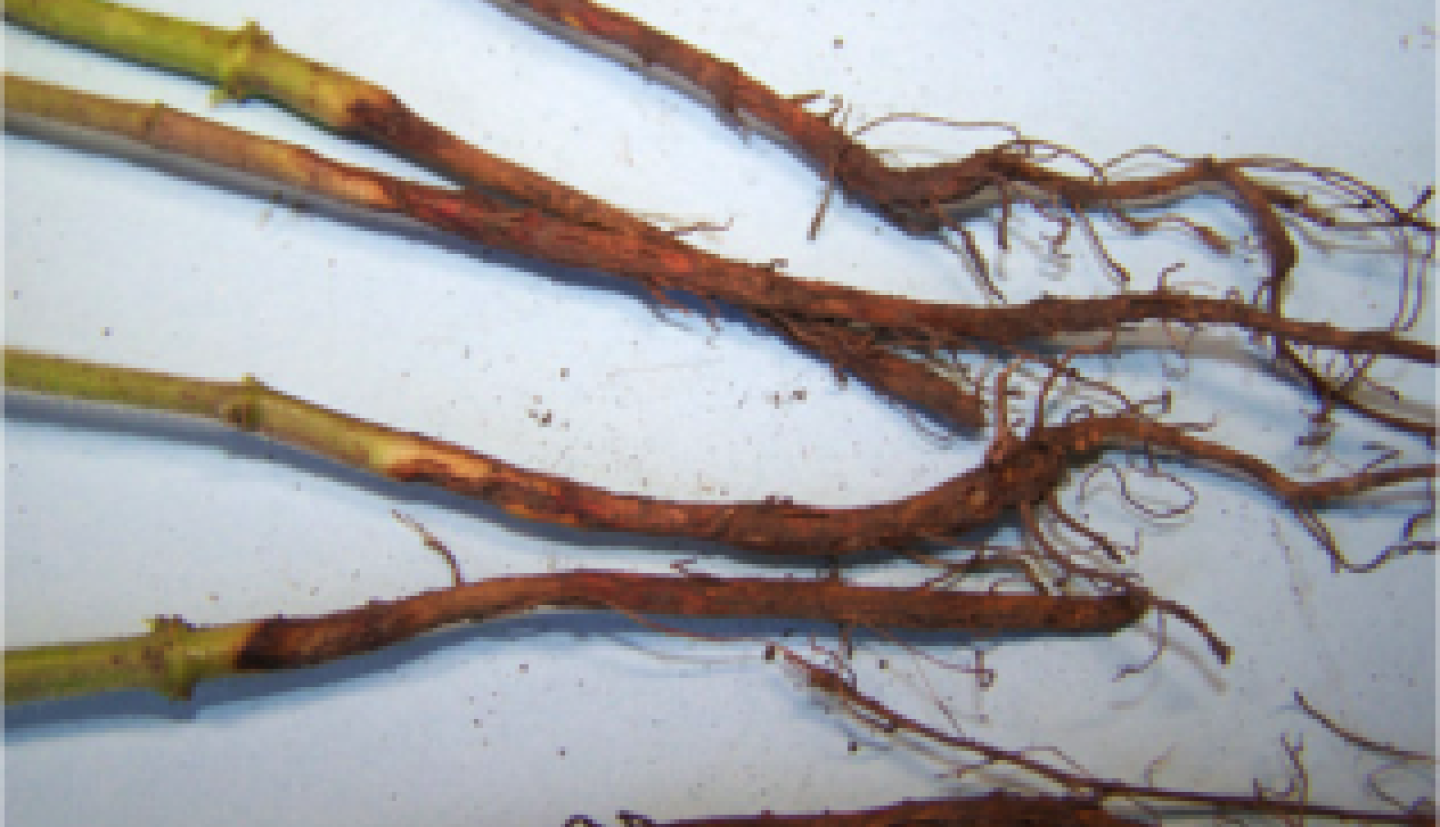
“Rhizoctonia root rot | CALS” from cals.cornell.edu
Understanding Rhizoctonia Root Rot in Soybeans
Rhizoctonia root rot, caused by the fungus Rhizoctonia solani, is a significant disease affecting soybeans. This fungus thrives in soil and can survive for years, making it a persistent threat to soybean crops. The disease primarily targets the roots and stems, leading to a variety of symptoms that can severely impact plant health and yield.
The fungus invades the plant through the soil, often entering through small wounds or natural openings in the roots. Once inside, it disrupts the plant’s vascular system, hindering the flow of water and nutrients. This can lead to stunted growth, wilting, and in severe cases, plant death.
Identifying Symptoms of Rhizoctonia Root Rot
Recognizing the symptoms of Rhizoctonia root rot early is crucial for effective management. The most common symptoms include:
Reddish-brown lesions on the roots and lower stems
Stunted growth and uneven plant development
Yellowing and wilting of leaves
Reduced root mass and poor root health
These symptoms can often be confused with other root diseases, so it’s essential to conduct a thorough examination and, if necessary, send samples to a diagnostic lab for confirmation. For more information on managing similar diseases, you can refer to Soybean Anthracnose Stem Blight.
“In Illinois, older soybean plants in fields infected with Rhizoctonia appear as areas of stunted, uneven growth. Plants are not killed but remain light green in color and stunted until midseason.” – University of Illinois Extension
Causes and Impact of Rhizoctonia Root Rot

“Don’t Let Poor Soil Drainage Sink Your …” from www.plantchampion.com
Understanding the causes and impact of Rhizoctonia root rot is essential for developing effective management strategies. The disease is influenced by various environmental factors and can have a substantial impact on soybean yield and plant health.
Environmental Factors Contributing to Disease Development
Several environmental factors contribute to the development and severity of Rhizoctonia root rot:
Soil Moisture: Wet conditions and poorly drained soils create an ideal environment for the fungus to thrive.
Soil Temperature: Moderate soil temperatures (60-75°F) are optimal for the growth of Rhizoctonia solani.
Soil Compaction: Compacted soils restrict root growth and increase the likelihood of infection.
Crop Residue: The fungus can survive on crop debris, making fields with high residue levels more susceptible.
Impact on Soybean Yield and Plant Health
Rhizoctonia root rot can significantly impact soybean yield and overall plant health. Infected plants often exhibit reduced growth and vigor, leading to lower yields. The disease can also cause root rot and stem lesions, further weakening the plants and making them more susceptible to other stresses. Learn more about soil moisture sensors and their role in managing soybean health.
In severe cases, the disease can lead to complete crop failure, especially in fields with poor drainage and high soil moisture levels. Therefore, managing Rhizoctonia root rot is crucial for maintaining healthy soybean crops and optimizing yields.
Use of Drip and Sprinkler Irrigation Systems
Smart irrigation management is vital in controlling Rhizoctonia root rot. Drip and sprinkler irrigation systems can be particularly effective in managing soil moisture levels, which is crucial for preventing the conditions that favor the growth of Rhizoctonia solani. For more information on effective soil moisture management, check out the best soil moisture sensors for soybean precision agriculture.
Drip irrigation delivers water directly to the root zone of the plants, minimizing soil moisture fluctuations and reducing the risk of disease development. This method ensures that water is applied evenly and efficiently, promoting healthy root growth and minimizing water wastage.
Sprinkler irrigation systems, when used correctly, can also help manage soil moisture levels. However, it’s essential to avoid over-irrigation and ensure that the soil is not waterlogged, as excessive moisture can promote the growth of the fungus.
Control Strategies for Rhizoctonia Root Rot
“Fields with a history of Rhizoctonia crown and root rot should be planted to a variety with good disease resistance. The fungicides azoxystrobin (Quadris or AZteroid) or Priaxor at labeled rates, applied in a 7-inch band before infection takes place, provide effective control … Timing application just before a rain event, or before a scheduled irrigation where this is available, will help to get the fungicide in a position to protect the roots. ” – North Dakota State University
Effective control of Rhizoctonia root rot requires a multi-faceted approach. This includes crop rotation, soil management, the use of resistant varieties, and appropriate fungicide applications.
Crop Rotation and Soil Management
Crop rotation is a fundamental strategy in managing Rhizoctonia root rot. Rotating soybeans with non-host crops like corn or small grains can reduce the pathogen’s population in the soil. This breaks the disease cycle and minimizes the risk of infection in subsequent soybean crops. Additionally, incorporating cover crops can improve soil health and further reduce disease pressure.
Soil management practices such as maintaining proper soil fertility and pH levels can also help. Balanced fertilization and soil amendments improve soil health and enhance plant resistance to diseases.
Resistant Soybean Varieties
Planting resistant soybean varieties is one of the most effective ways to manage Rhizoctonia root rot. These varieties are bred to withstand infection and can significantly reduce disease incidence and severity.
Choose soybean varieties with proven resistance to Rhizoctonia solani.
Consult with local extension services or seed suppliers for recommendations on resistant varieties suitable for your region.
Combine resistant varieties with other management practices for optimal results.
Using resistant varieties not only helps in managing Rhizoctonia root rot but also contributes to overall crop health and productivity.
Fungicide Applications
Fungicides can be an effective tool in managing Rhizoctonia root rot when used correctly. Seed treatments and soil-applied fungicides can protect young plants from infection and reduce disease pressure.
It’s essential to choose fungicides with proven efficacy against Rhizoctonia solani. Products containing azoxystrobin, such as Quadris or AZteroid, are commonly recommended. These fungicides should be applied at labeled rates and in a manner that ensures good coverage of the soil and root zone.
Field Drainage and Tillage Practices
Proper field drainage and tillage practices are crucial in managing soil moisture levels and reducing the risk of Rhizoctonia root rot. Fields with poor drainage are more susceptible to waterlogging, which creates favorable conditions for the fungus.
Implementing drainage systems, such as tile drainage, can help remove excess water from the soil and prevent waterlogging. Additionally, tillage practices that improve soil structure and reduce compaction can enhance water infiltration and root growth.
Comprehensive Management Plan

A comprehensive management plan for Rhizoctonia root rot involves integrating multiple control methods to achieve the best results. This holistic approach ensures that all aspects of disease management are addressed, reducing the risk of infection and promoting healthy soybean crops.
Rotate crops to break the disease cycle and reduce pathogen populations in the soil.
Use resistant soybean varieties to minimize disease incidence and severity.
Apply fungicides as part of an integrated pest management (IPM) strategy.
Implement proper irrigation practices to manage soil moisture levels.
Maintain field drainage and use appropriate tillage practices to improve soil health.
By combining these strategies, you can effectively manage Rhizoctonia root rot and protect your soybean crops from this persistent disease.
To effectively manage Rhizoctonia root rot, it’s essential to monitor your soybean fields regularly and detect early signs of the disease. Early detection allows for timely intervention, which can prevent the disease from spreading and causing significant damage.
Monitoring and Early Detection
Regular field scouting is crucial for identifying Rhizoctonia root rot early. Look for symptoms such as reddish-brown lesions on the roots and lower stems, stunted growth, and yellowing leaves. Pay close attention to areas with poor drainage or a history of the disease, as these are more likely to show early signs of infection.
Besides visual inspection, soil testing can help identify the presence of Rhizoctonia solani in your fields. Soil samples can be sent to diagnostic labs for analysis, providing valuable information about the pathogen’s presence and concentration.
Adjusting Practices Based on Environmental Conditions
Environmental conditions play a significant role in the development and severity of Rhizoctonia root rot. Adjusting your management practices based on these conditions can help reduce the risk of infection and promote healthy crop growth.
For instance, if your fields are prone to waterlogging, consider implementing drainage systems to remove excess water. In areas with compacted soils, use tillage practices that improve soil structure and enhance water infiltration. Additionally, adjusting your irrigation schedule to avoid overwatering can help maintain optimal soil moisture levels.
It’s also essential to monitor weather conditions and adjust your practices accordingly. For example, during periods of heavy rainfall, take extra precautions to prevent waterlogging and reduce the risk of disease development.
Implement drainage systems to remove excess water from the soil.
Use tillage practices that improve soil structure and reduce compaction.
Adjust irrigation schedules to avoid overwatering and maintain optimal soil moisture levels.
Monitor weather conditions and take precautions during periods of heavy rainfall.
Frequently Asked Questions (FAQ)

What are the early signs of Rhizoctonia Root Rot in Soybeans?
Early signs of Rhizoctonia root rot in soybeans include reddish-brown lesions on the roots and lower stems, stunted growth, and yellowing leaves. These symptoms often appear in areas with poor drainage or a history of the disease. Regular field scouting and soil testing can help detect the disease early and allow for timely intervention.
How does irrigation affect the development of Rhizoctonia Root Rot?
Irrigation plays a crucial role in the development of Rhizoctonia root rot. Excessive soil moisture and waterlogged conditions create an ideal environment for the fungus to thrive. Proper irrigation management, such as using drip or sprinkler systems and avoiding overwatering, can help maintain optimal soil moisture levels and reduce the risk of disease development.
Can Rhizoctonia Root Rot be completely eradicated?
Completely eradicating Rhizoctonia root rot is challenging due to the fungus’s ability to survive in the soil for many years. However, effective management practices, such as crop rotation, using resistant varieties, proper irrigation, and fungicide applications, can significantly reduce the disease’s impact and prevent its spread.
What are the best soybean varieties resistant to Rhizoctonia Root Rot?
Several soybean varieties have been bred for resistance to Rhizoctonia root rot. Consult with local extension services or seed suppliers for recommendations on resistant varieties suitable for your region. Combining resistant varieties with other management practices can help minimize disease incidence and severity, promoting healthy crop growth and higher yields. For more information on managing soybean diseases, visit Best Practices to Manage Soybean Diseases.
Smart irrigation management plays a crucial role in controlling soybean Rhizoctonia root rot. By utilizing advanced technologies, farmers can monitor soil moisture levels and ensure optimal irrigation practices. This not only helps in preventing the disease but also promotes healthy crop growth. For instance, implementing wireless soil moisture sensors can provide real-time data, allowing for precise water management and reducing the risk of over-irrigation.





Leave a Reply