
-

Valley ICON Alarm Codes: What AgSense 365 Alerts Mean and How to Respond
Key Takeaways: Valley ICON panels do not communicate through a numbered fault code list — they report alarm conditions as descriptive text states that AgSense 365 converts into push notifications and email alerts delivered to your smartphone. Understanding what each alert category means, what condition triggered it, and what the correct response is determines whether…
-

Valley vs Reinke vs Lindsay: Which Brand Has the Strongest Dealer Network in Your State
Key Takeaways: The Valley vs Reinke vs Lindsay dealer network question is one of the most frequently asked — and most frequently misframed — questions in commercial soybean irrigation planning. Brand loyalty and national market share statistics tell you very little about which dealer in your specific county will respond in four hours when your…
-

Upgrading from Basic Timers to ET-Based Control: What It Costs and What It Returns
Key Takeaways: A timer-based center pivot schedule from 2005 is still running on thousands of commercial soybean operations across the US Corn Belt — applying fixed run times on fixed intervals regardless of whether last week’s rainfall was 0.1 inches or 1.5 inches, regardless of whether the temperature was 75°F or 98°F, and regardless of…
-

How to Calculate Irrigation ROI Before You Buy: A Commercial Soybean Farm Template
Key Takeaways: Irrigation ROI for a commercial soybean farm is calculable before you buy — with enough precision to determine whether the investment is justified on your specific operation and fields. The calculation requires honest inputs about your field’s drought vulnerability, realistic yield improvement estimates from university research on comparable soils, and a clear-eyed view…
-

Reinke Pivot Fault Codes: Common Error Messages and What They Mean
Key Takeaways: Reinke pivot fault codes are the panel’s way of telling you what stopped the machine and where the problem is located. Unlike some equipment categories where manufacturer fault code lists are publicly comprehensive, Reinke’s panel-specific fault code documentation is primarily contained in operator manuals that are panel-version-specific — the RC10 manual, the RC3…
-

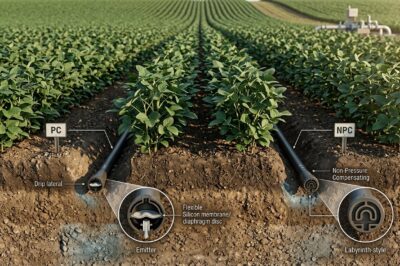
Netafim SDI Systems: How to Evaluate a Commercial Dealer for Soybean Installations
Key Takeaways: Netafim invented commercial drip irrigation and remains the technology leader in the category globally. Their Streamline, Uniram, and CNL dripline products represent genuine engineering advancement in emitter technology, clog resistance, and wall thickness options relative to the broader drip tape market. But a Netafim authorization does not make a dealer competent at commercial…
-

Adding GPS and Telemetry to Older Center Pivots: AgSense Field Commander vs Native Panels
Key Takeaways: The pivot structural systems installed on US soybean farms in the 1990s and early 2000s — many still in good mechanical condition with decades of useful life remaining — were built without the GPS positioning, cellular telemetry, and remote management capability that commercial soybean production now requires. Running a commercial soybean irrigation operation…
-

EQIP Application Step-by-Step: How Soybean Farmers Get Approved for Irrigation Cost-Share
Key Takeaways: EQIP cost-share at 75% of eligible project costs can reduce a $150,000 center pivot installation to a $37,500 net investment — but only if the application is submitted correctly, ranked competitively, and the installation is documented to NRCS practice standards. Growers who approach EQIP casually — submitting a basic application without understanding ranking…
-

Center Pivot Safety Shutdown Faults: How to Reset, Diagnose, and When to Call a Technician
Key Takeaways: A center pivot safety shutdown during peak soybean irrigation demand is one of the most stressful events in a grower’s season — made more stressful when the grower does not know whether the shutdown is a simple reset situation or the beginning of a serious mechanical or electrical problem. Understanding the different categories…
-

Lindsay Zimmatic Center Pivot Buying Guide: Dealer Checklist and Questions
Key Takeaways: Lindsay Zimmatic is the third-largest center pivot brand in the US market by installed base — behind Valley and Reinke — but its FieldNET Advisor scheduling platform gives it a competitive advantage in one specific and commercially important dimension: automated daily VRI prescription generation that does not require manual operator input. For commercial…
Follow Us
-
GPS vs Traditional Pivot Guidance for Soybeans: Accuracy, Maintenance, and Upgrade Economics
-
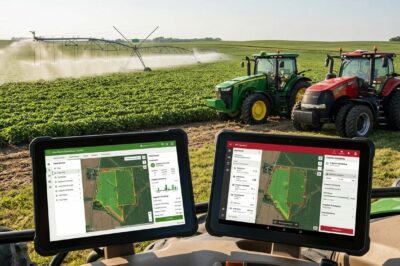
John Deere vs Case IH Irrigation Platform for Soybeans: Operations Center vs AFS Connect and What Each Actually Manages
-
T-L Irrigation Pricing for Soybeans: What Drives System Cost and How to Compare Per-Acre Investment
-
Pivot Wheel Track Compaction and Soybean Yield: Impact, Measurement, and Management