
-

Precision Irrigation Checklist for Soybean Growth Stages (V1–R6)
Key Takeaways Article Summary: This soybean irrigation checklist by growth stage gives you a stage-by-stage reference for when to irrigate, how much water your crop needs, and when your soil moisture depletion trigger should change — from first true leaves through pod fill. Why a Stage-by-Stage Checklist Beats a Fixed Watering Schedule Soybeans don’t use water…
-

Wisconsin Irrigation Equipment Dealers: Center Pivot and SDI for Commercial Soybean Farms
Wisconsin’s commercial soybean irrigation is concentrated in the central sands region — Adams, Waushara, Portage, Marquette, and Waupaca counties — where excessively drained sandy soils make supplemental irrigation a production necessity rather than a drought insurance investment The central sands is one of the most intensively irrigated agricultural regions in the upper Midwest, with center…
-

Michigan Irrigation Equipment Dealers: Center Pivot and SDI for Commercial Soybean Farms
Michigan’s commercial soybean irrigation is concentrated in the southwest Lower Peninsula counties — Berrien, Cass, Van Buren, Kalamazoo, and adjacent counties — where sandy soils and drought frequency create the strongest supplemental irrigation ROI in the state Michigan has a more developed SDI dealer network than most Midwest states — proximity to Trickl-Eez in St.…
-

North Dakota Irrigation Equipment Dealers: Center Pivot and SDI for Commercial Soybean Farms
North Dakota’s commercial soybean irrigation is concentrated in the southeast and south-central counties where sandy loam and loamy soils on flat glacial lake plain terrain create the highest supplemental irrigation ROI in the state Valley Irrigation has the broadest authorized dealer network in North Dakota; Reinke and Lindsay Zimmatic have more limited but present coverage…
-

Iowa Irrigation Equipment Dealers: Center Pivot and SDI for Commercial Soybean Farms
Key Takeaways: Iowa consistently ranks among the top three US soybean-producing states by volume, with commercial production spread across the state but concentrated most heavily in the north-central and northwest counties where pivot-irrigated acreage has grown steadily as summer drought frequency increases. This guide covers authorized Iowa irrigation equipment dealers by region and system type,…
-

Nebraska Irrigation Equipment Dealers: Center Pivot, SDI, and Service Directory for Soybean Farms
Key Takeaways: Nebraska is the most heavily irrigated soybean state in the US, with center pivot systems covering millions of acres across the Platte River valley, Sandhills, and Panhandle. The state’s irrigation dealer network is the deepest of any Midwest state — a product of decades of intensive commercial irrigation adoption and the presence of…
-

How to Evaluate a Center Pivot Service Contract: What Is Covered and What Costs Extra
Key Takeaways: A center pivot service contract is only as valuable as the dealer’s ability to execute what it promises during peak irrigation season — and the contract terms that look comprehensive on paper often contain exclusions, mileage charges, and response time gaps that limit practical coverage precisely when it matters most. Evaluating a service…
-

Reinke Dealer Service Evaluation: Red Flags and Green Lights Before You Sign
Key Takeaways: Choosing a Reinke dealer is a longer-term commitment than purchasing the equipment itself. A center pivot installation creates a service dependency that lasts 25–30 years — the dealer who installs your machine is the dealer you will call at midnight in July when your pivot stops during R4 full pod on 130 acres…
-

Precision Ag Add-Ons That Increase Soybean Yield Most per Dollar Invested
Key Takeaways: The highest ROI precision ag investments for irrigated soybean operations are ET-based irrigation scheduling (fastest payback), soil moisture sensors (best water management intelligence), and yield mapping (essential data foundation for all other precision decisions) VRI hardware has the largest absolute yield potential but the narrowest field-specific justification — it pays back well on…
-

Dealer Financing Programs for Irrigation Equipment: What Valley, Reinke, and Lindsay Offer
Key Takeaways: The three major US center pivot manufacturers — Valley, Reinke, and Lindsay — each offer financing programs through their authorized dealer networks designed specifically for the agricultural equipment purchase cycle. These programs exist to solve a timing problem: pivots are typically installed in spring and summer, EQIP cost-share is paid months after installation,…
Follow Us
-
GPS vs Traditional Pivot Guidance for Soybeans: Accuracy, Maintenance, and Upgrade Economics
-
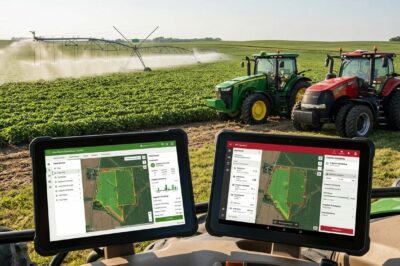
John Deere vs Case IH Irrigation Platform for Soybeans: Operations Center vs AFS Connect and What Each Actually Manages
-
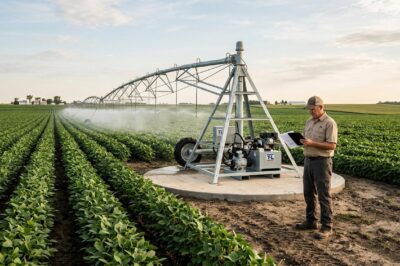
T-L Irrigation Pricing for Soybeans: What Drives System Cost and How to Compare Per-Acre Investment
-
Pivot Wheel Track Compaction and Soybean Yield: Impact, Measurement, and Management